
NOVEMBER 22, 2025
Why Isn’t My AC Cooling? 7 Common Causes Jackson Homeowners Can Check Before Calling for Repair
 Logan Wilson Owner & Lead Technician · NCI-Certified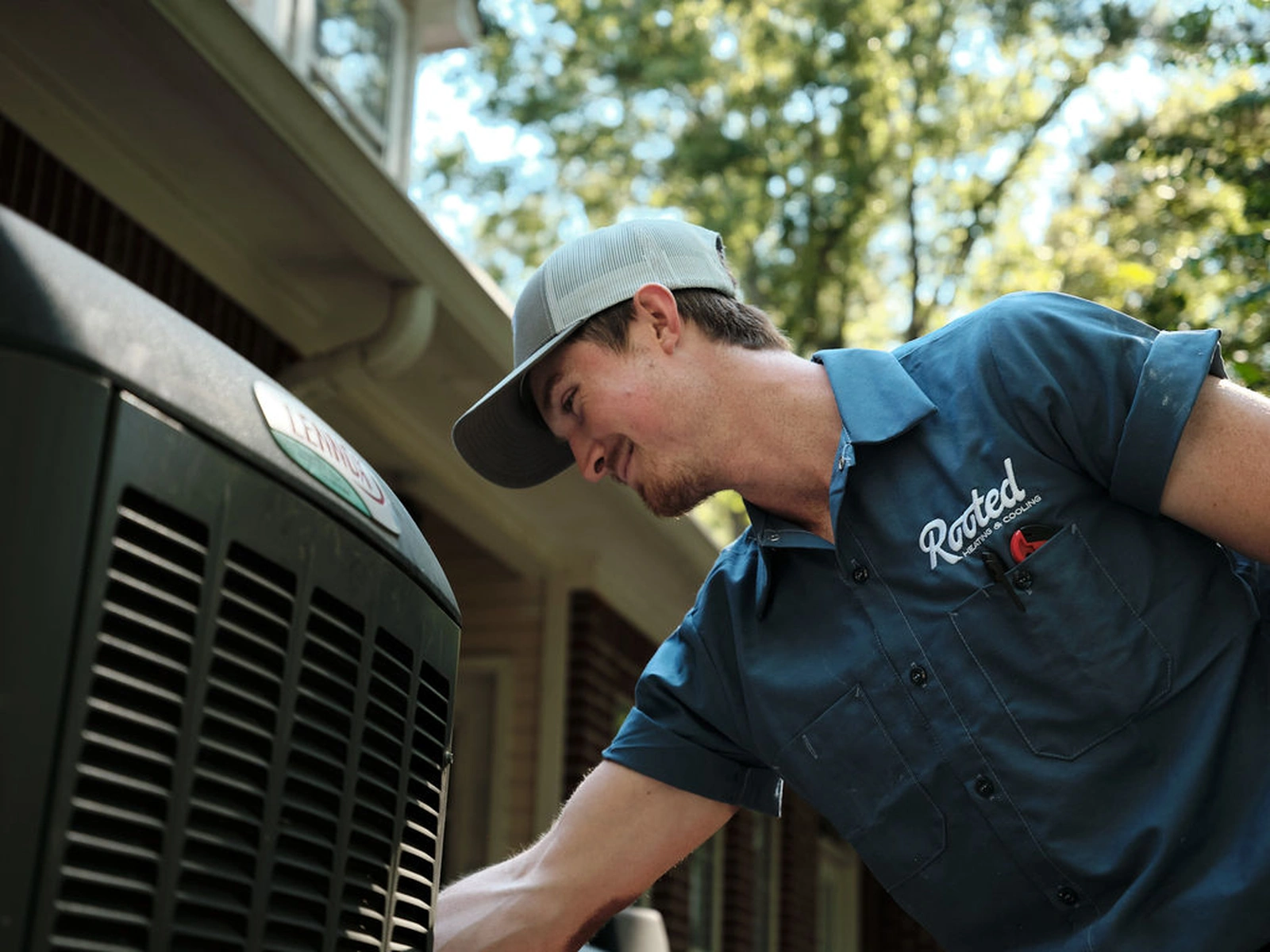
Before you panic in the Mississippi heat, try these simple checks. Some fixes take 30 seconds. Others need a professional—we’ll tell you which is which.
It’s 95 degrees in Jackson, humidity is oppressive, and your AC is running but your house isn’t getting cool. We get it. This is borderline emergency territory in a Mississippi summer.
Before you assume the worst (and spend money you might not need to), let’s walk through what might be happening. Some of these you can fix yourself in minutes. Others require professional help—and we’ll be straight with you about which is which.
1. Check Your Air Filter (2-Minute Fix)
This is the single most common cause of AC problems, and it’s the easiest to fix.
A clogged air filter restricts airflow so severely that your system can’t cool properly. In extreme cases, it causes the evaporator coil to freeze, which makes everything worse.
How to check: Locate your filter (usually behind a return air grille on your wall or in the air handler). Pull it out and hold it up to light. If you can’t see light through it, it’s overdue for replacement.
The fix: Replace it. A basic filter costs $5-15 at any hardware store. In Mississippi’s dusty, pollen-heavy environment, check your filter monthly during heavy use seasons.
Pro tip: If your filter is completely clogged and your AC has been struggling, the evaporator coil might have frozen. Turn the system to “fan only” for a few hours to let it thaw before running cooling again.
2. Verify Your Thermostat Settings
This sounds almost too simple, but we see it regularly.
Check that your thermostat is set to “cool” (not “heat” or “off”) and that the temperature setting is below your current room temperature. Also verify it’s set to “auto” not “on”—the “on” setting runs the fan continuously even when the AC isn’t actively cooling, which can make your house feel warmer and more humid.
Another thermostat issue: Dead batteries. Many thermostats will display but malfunction with low batteries. If your thermostat uses batteries, replace them and see if behavior improves.
Smart thermostat users: Check that someone hasn’t accidentally adjusted settings via the app, or that a schedule isn’t overriding your preferences.
3. Inspect Your Outdoor Unit
Your condenser (the outdoor unit) needs clear airflow to release heat. If it’s blocked, your whole system struggles.
Walk outside and check for:
- Vegetation growing against or around the unit
- Leaves, grass clippings, or debris piled against the fins
- A protective cover still on from winter (it happens)
- Anything leaning against or sitting on top of the unit
The fix: Clear at least 2 feet of space around all sides. Gently rinse debris from the fins with a garden hose (not a pressure washer—that damages the delicate fins).
While you’re out there: Is the unit running at all? If the fan isn’t spinning and you don’t hear the compressor humming, you might have an electrical issue.
4. Check Your Circuit Breakers
AC systems typically have two breakers—one for the indoor air handler and one for the outdoor condenser. If either trips, your cooling stops or becomes ineffective.
How to check: Find your electrical panel and look for breakers labeled “AC,” “HVAC,” “Air Handler,” or “Condenser.” If either is in the middle position or flipped to “off,” reset it by pushing it fully off, then back on.
Important warning: If a breaker trips repeatedly, stop resetting it. Repeated tripping indicates an electrical problem that needs professional diagnosis. Continuing to reset it creates fire risk.
5. Look for Frozen Evaporator Coils
If your indoor unit has ice forming on it, you’ve found your problem—but the ice itself isn’t the cause, it’s a symptom.
Signs of frozen coils:
- Ice visible on refrigerant lines or the indoor unit
- Water pooling around your air handler
- Warm air from vents despite the system running
- Higher than normal humidity indoors
Common causes of freezing:
- Dirty air filter (see #1)
- Blocked return air vents
- Low refrigerant (requires professional service)
- Blower motor problems (requires professional service)
Immediate action: Turn off the AC and run only the fan to thaw the coils. This takes 2-4 hours. Don’t keep running a frozen system—it won’t cool and you risk damaging the compressor.
If the coils freeze again after thawing and you’ve confirmed the filter is clean and vents are open, you need professional diagnosis.
6. Signs of Refrigerant Leaks (Call a Professional)
Refrigerant is the lifeblood of your AC system. If it’s low, cooling capacity drops dramatically. Unfortunately, this isn’t something you can diagnose or fix yourself.
Warning signs that suggest low refrigerant:
- Hissing or bubbling sounds from the indoor unit
- Ice formation on the refrigerant lines
- Cooling that’s weak despite the system running constantly
- Higher energy bills without explanation
Why you need a pro: Refrigerant doesn’t “wear out” or need regular topping off. If it’s low, you have a leak somewhere. Adding refrigerant without finding and fixing the leak is throwing money away—it’ll just leak out again. Plus, refrigerant handling requires EPA certification and specialized equipment.
7. Your System Might Be Undersized
Here’s an uncomfortable truth: some AC systems were never capable of keeping up with Mississippi summers. They were undersized from installation, either to save money or due to poor load calculations.
Signs of an undersized system:
- AC runs constantly on hot days but never reaches set temperature
- Problems are worst on the hottest afternoons
- The system cools adequately in spring and fall but fails in July and August
- Certain rooms are always warmer than others
The reality: No amount of troubleshooting fixes an undersized system. If your AC has always struggled during peak summer heat, the equipment itself may be inadequate for your home’s cooling load.
When to Call for Professional Help
You’ve checked everything above and the problem persists. Now what?
Call a professional if:
- Breakers trip repeatedly
- Coils freeze after you’ve addressed airflow issues
- You suspect refrigerant leaks
- The outdoor unit isn’t running at all
- You hear unusual sounds (grinding, squealing, clicking)
- Your system has never adequately cooled your home
What to expect from a good service call: A proper diagnosis, not just a quick “you need a new system” verdict. We test components, measure refrigerant levels, check electrical connections, and evaluate airflow before recommending anything. Sometimes the fix is simple and inexpensive. Sometimes it’s not. Either way, you deserve honest information.
The Bottom Line
Many AC problems have simple solutions—a dirty filter, a tripped breaker, a blocked outdoor unit. These cost nothing to fix and take minutes to check.
But when the simple stuff doesn’t solve it, resist the urge to keep troubleshooting. Mississippi heat is dangerous, and a professional diagnosis typically costs far less than the damage from running a struggling system too long.
We’re here when you need us. And if you check these seven things and realize you could’ve handled it yourself? Good. That’s exactly what we’d want you to do.
Rooted Heating & Air provides honest AC repair throughout Jackson, Madison, Ridgeland, Brandon, and Central Mississippi. Call 601-966-4601 when DIY isn’t enough.