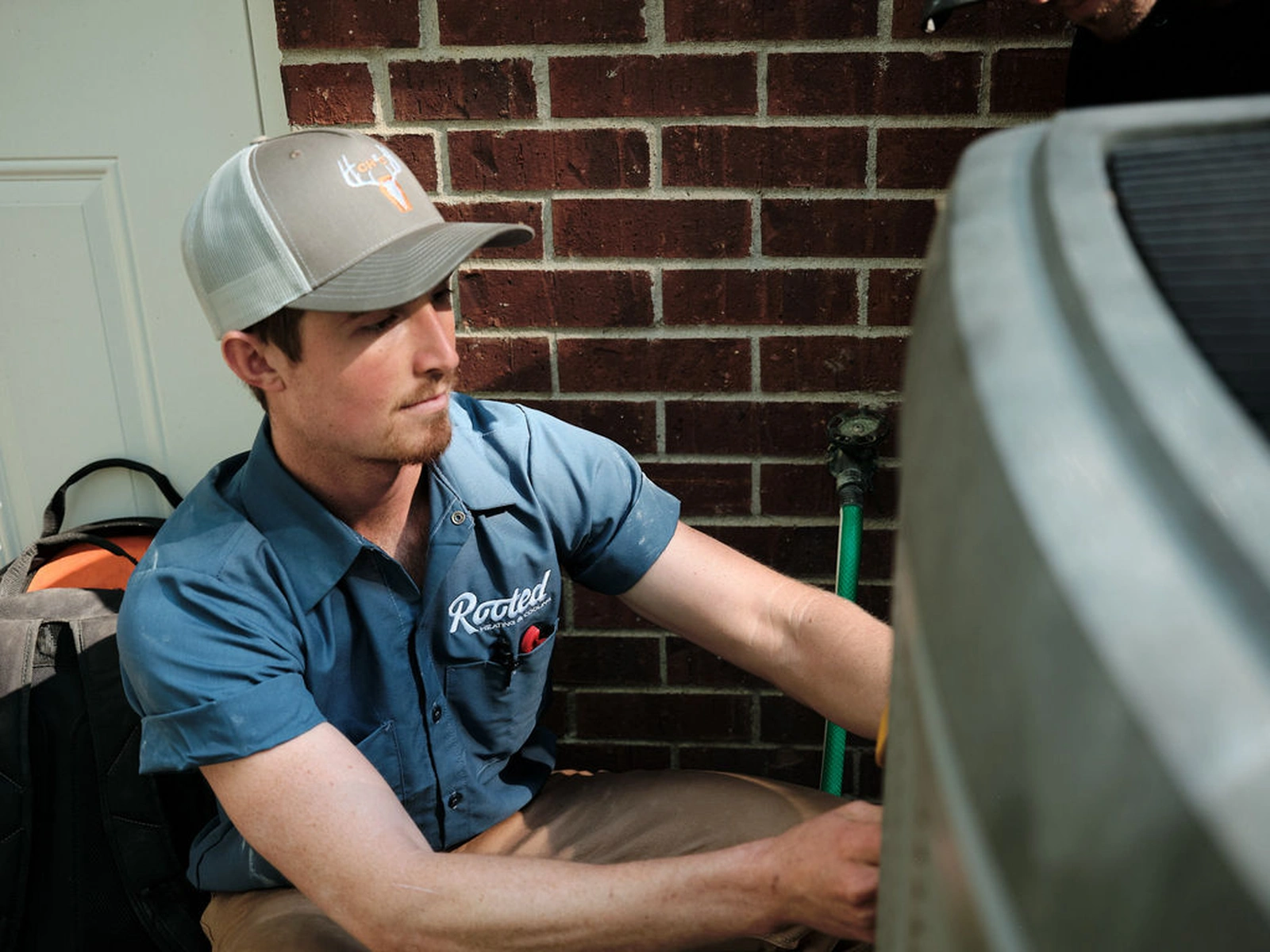
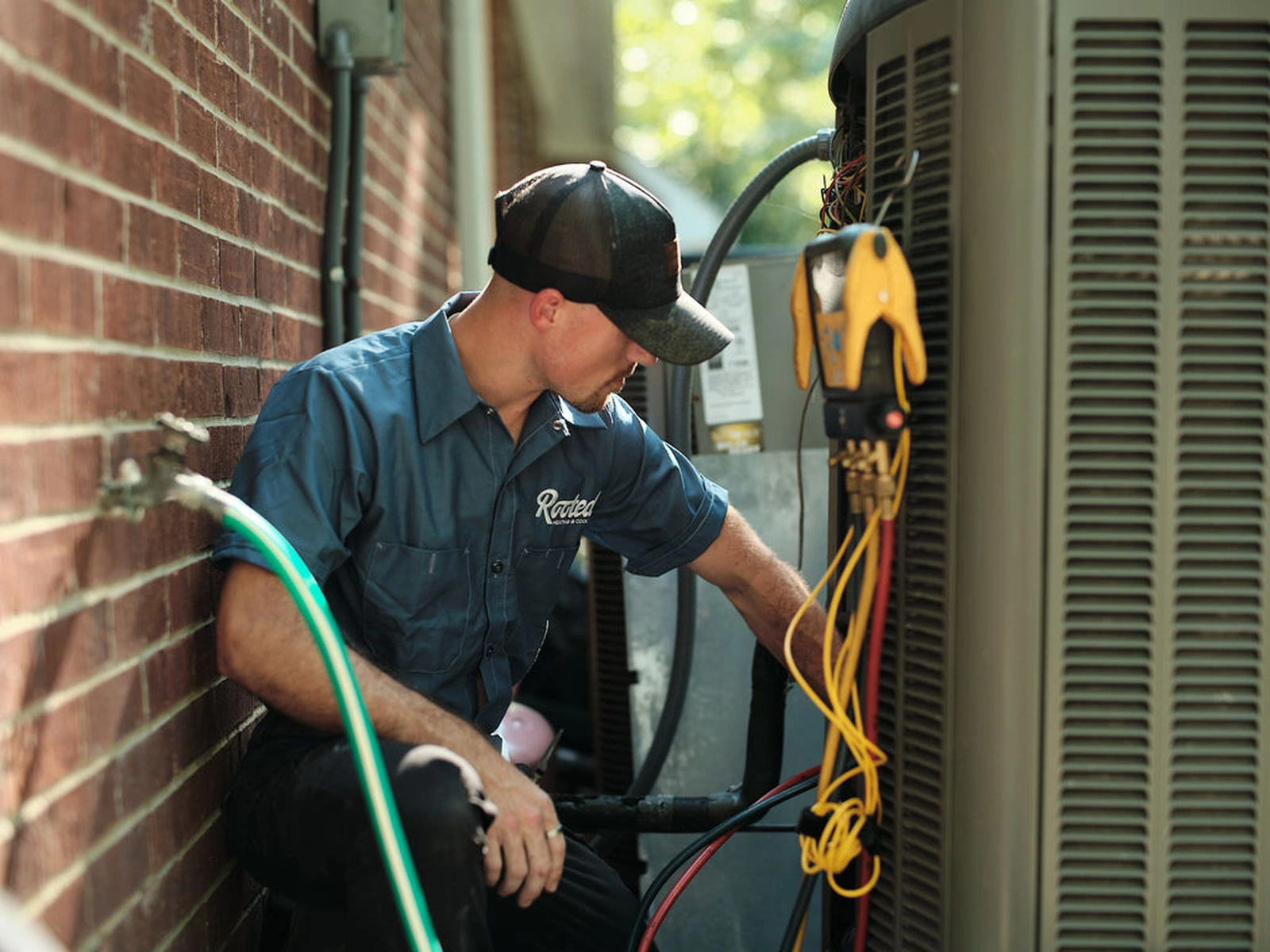
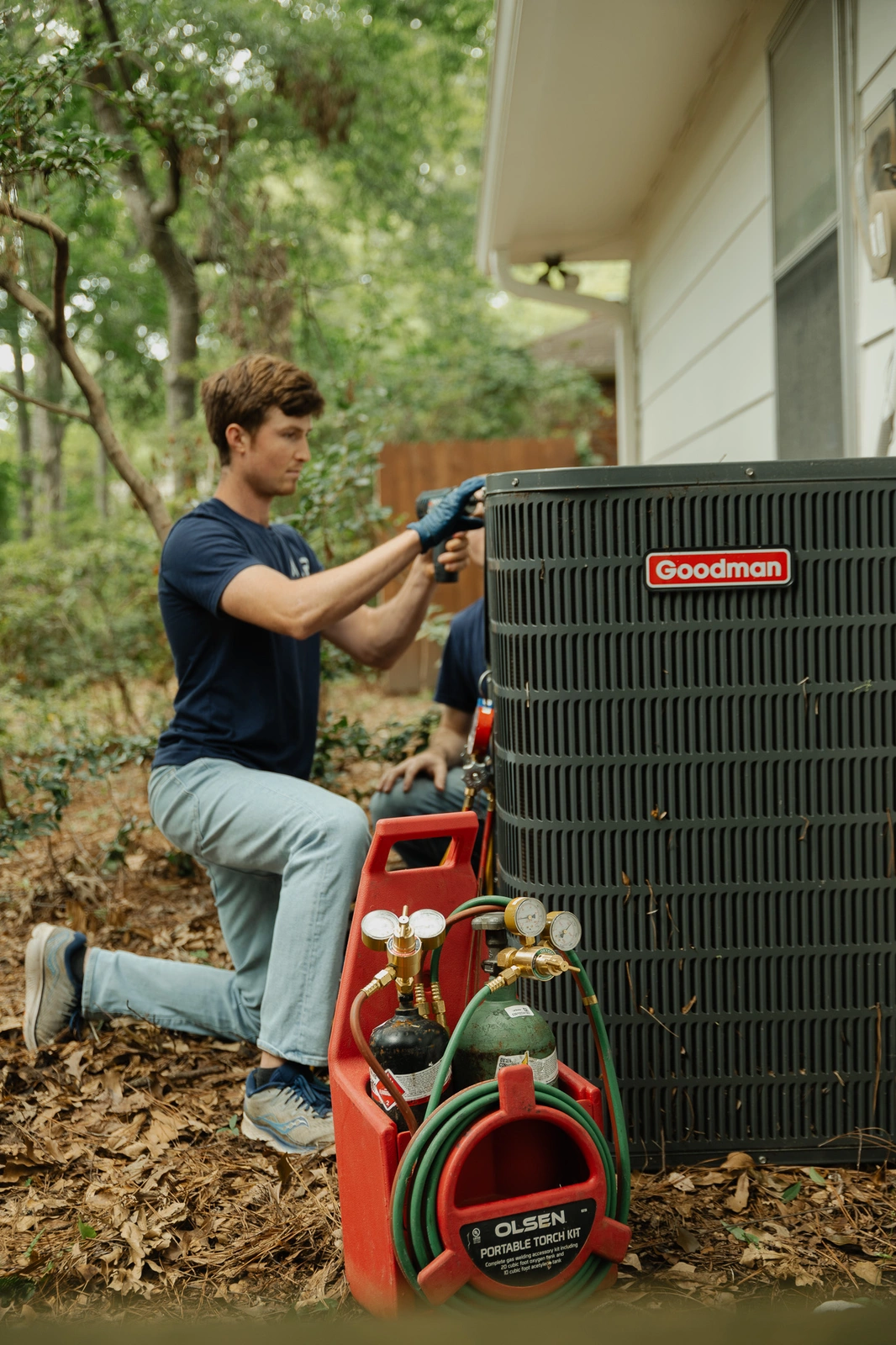
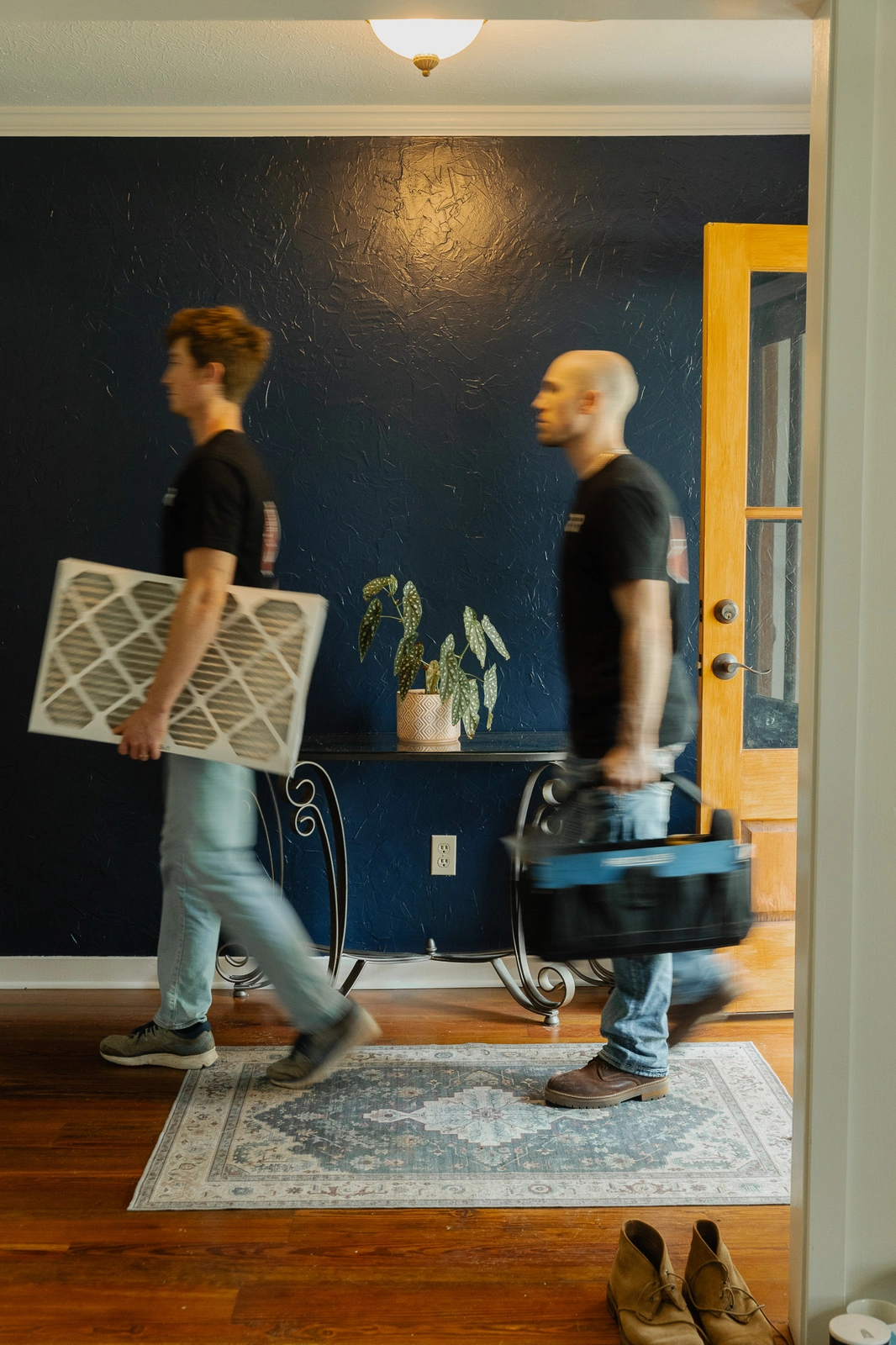
Jackson's cooling season runs roughly five months, and the failures cluster in the middle of it. Summer humidity sits in the 70–80% range and July dew points near 72°F mean a house without air conditioning turns damp as well as hot within hours, not days. That is why speed and accuracy have to arrive together here — a fast truck is only worth as much as the diagnosis riding in it. We stock for the failures that dominate Jackson no-cool calls: failed capacitors, defective contactors, condenser fan motors, blocked condensate drains, and low refrigerant charge.
The pattern is shaped by how these houses were built. In Belhaven, Fondren, and Eastover much of the stock is 1940s through 1970s, and the original ductwork is often still up in the attic — unsealed, crushed at the boots, sitting in 130°F summer air. A system in that situation can be mechanically healthy and still lose 20–30% of the conditioned air it makes before a register ever sees it, which is why a Jackson "it will not cool" call is as likely to be airflow restriction or duct leakage as a dead machine. In Northeast Jackson and Broadmoor, post-war additions left systems sized for the original footprint rather than the house as it now stands, so the added rooms are the rooms that fail first on a design day.
So the diagnosis has to separate three things that all present as "the AC quit": a component that has genuinely failed, a system starved by restriction, and a system that was never big enough for the house it sits in. A failed capacitor and a frozen evaporator coil feel the same from the hallway and are nothing alike on the gauges. We measure before we name it, we show you the reading, and when the honest answer is that a compressor is at the end of its life, we say so plainly and lay out the math rather than sell a repair we already know is temporary.
Belhaven
Housing from the 1920s–1940s with tight crawl spaces, undersized return air, and humidity that finds its way in through the original construction. A no-cool call here is often a frozen evaporator coil or a blocked condensate drain rather than a dead compressor — the moisture load these homes carry is what pushes a marginal system over.
Fondren
Historic bungalows and mid-century homes running original attic ductwork, where uneven cooling between rooms is the standing complaint. When one of these comes in as an emergency, the fault is as often airflow restriction — a clogged air filter, a crushed duct, a failing blower motor — as a failed part outside.
Northeast Jackson
Ranches from the 1960s–1980s, frequently with additions the original system was never sized for. Those systems run long and hard through a Jackson July, and long runtime is exactly what finds a weak capacitor or a pitted contactor — usually on the hottest afternoon of the year.