

Duct Testing & Sealing in Jackson, MS
Every HVAC company in Jackson will tell you your ducts leak. Almost none of them will tell you how much. Rooted Heating & Air tests first: we pressurize your duct system with a calibrated fan, measure the leakage in CFM, and report it as a percentage of the airflow your system is actually moving. That single number turns "your ducts leak" from a sales opinion into a measurement you can hold us to, and it decides whether sealing is worth doing on your house at all. Then we seal what the test found and re-test, so the result is a second number rather than a promise. Family-owned, instrument-led, and specific about what we measured.
- Duct leakage measured with a calibrated fan and reported as a percentage — before any sealing
- Total external static pressure, CFM, and temperature split read on your system, not estimated
- NCI-certified diagnostics — the method is testing and air balancing, not eyeballing
- A re-test after sealing, so the finished job is a number you can compare to the first one
Request Service Quote!
How can we help you?
Mission-Driven Service From People Who Actually Care!
your trusted local HVAC experts
Delivering high-value Duct Testing & Sealing services to our metro Jackson, MS communities
Fast Response Times
Same-day service to quickly meet your Duct Testing & Sealing needs
certified & experienced
NCI-certified diagnostics and years of hands-on experience
honest pricing
Transparent, upfront pricing with no hidden costs.
family-owned & operated
Biblically-based business with a focus on integrity and care.
What Comes Out, and What Gets Pulled In
A Leaking Duct System Is Two Problems at Once — and You Only Ever Hear About One
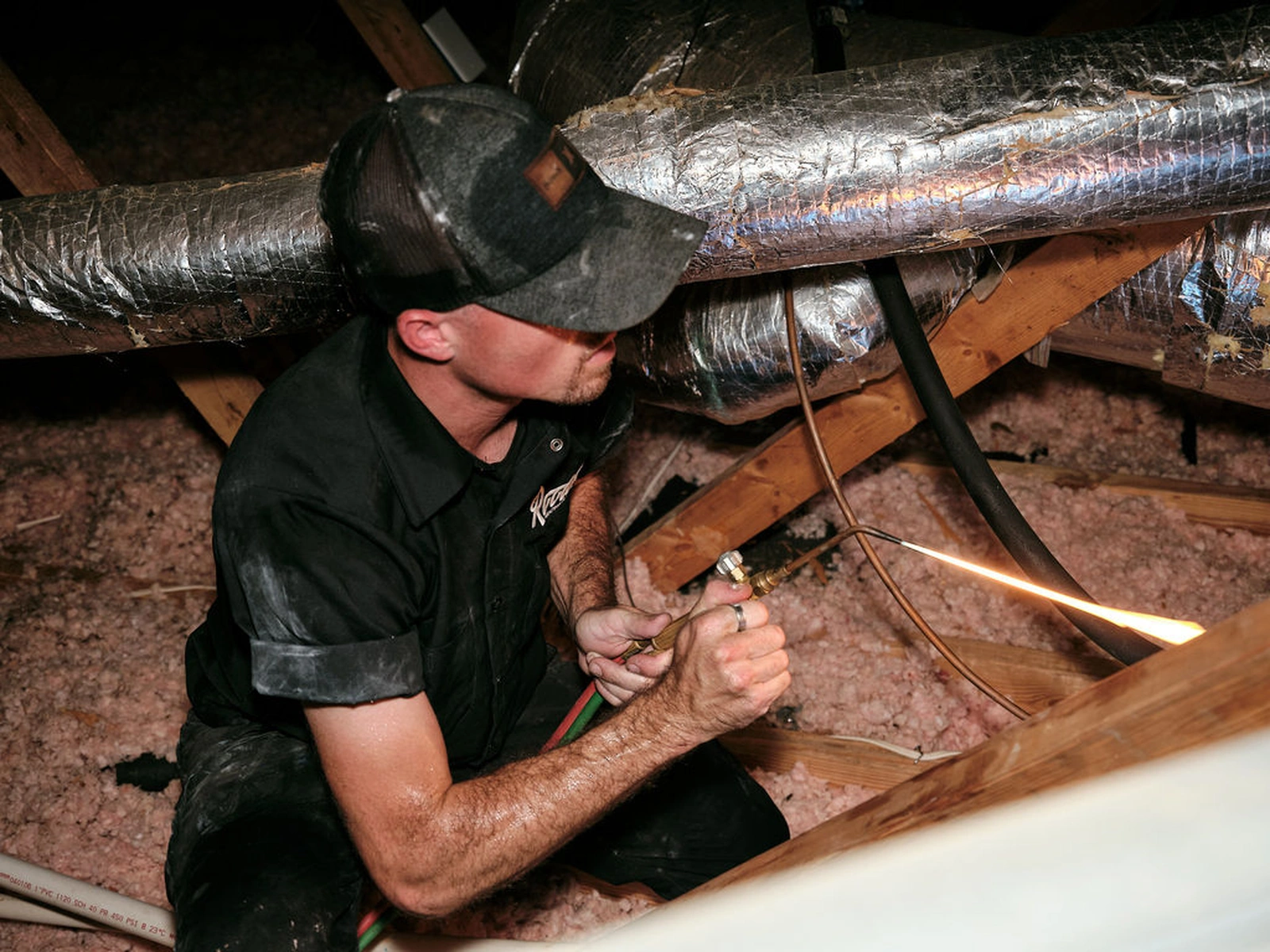
The Department of Energy has measured duct leakage in 90–100% of the homes it has tested. That is not a scare statistic; it is the baseline condition of American ductwork, and Jackson's older stock sits comfortably inside it. What almost nobody explains is that the leakage runs in two directions, and the two do completely different damage to your house.
The supply side is the half you have heard about. Conditioned air escapes through open seams, disconnected boots, and unsealed plenum joints on its way to the rooms — into an attic that clears 130°F in July. You paid to cool that air and it is heating the attic instead. It never reaches a register, so the thermostat never gets satisfied, so the system runs longer to do less. That shows up as rooms that will not cool, a unit that seems undersized, and a house that feels stuffy in August no matter what the thermostat says.
The return side is the half that goes unmentioned, and it is the one that belongs to your air quality rather than your comfort. A return duct is under negative pressure — it pulls. Every open seam, every gap around a boot, every unsealed panel joint on a return running through an attic or a crawl space is a straw drawing in whatever is on the other side: attic dust, loose fiberglass insulation fiber, and humid unconditioned air at 70–80% summer relative humidity. That material does not stay in the duct. It goes through the blower, past the coil, and out of every supply register in the house. This is why duct leakage is an indoor air quality problem before it is ever an efficiency problem, and it is why this page sits underneath our Jackson indoor air quality work rather than off in a corner labeled energy savings. Both halves are invisible from the hallway, and both are measurable in about the time it takes to drink a cup of coffee — which is the whole reason this service goes unsold in this market.
Don't Delay - We're Here to Help!
The Symptoms of Duct Leakage Read Like a Failing Air Conditioner
- One or two rooms never keep up in summer, usually the ones farthest from the air handler or on the end of a long attic run.
- Your equipment runs and runs without satisfying the thermostat, and someone has already told you the unit is probably undersized.
- The hall or the closet smells like attic when the system starts, because that is exactly what is being pulled into the return.
- Fine fiberglass-looking dust settles at the supply registers within days of cleaning, coming out of the ducts rather than in through the windows.
- The house stays humid and clammy even at a comfortable temperature — a signature of unconditioned outdoor air being drawn into the system.
- You replaced equipment recently and the new system still underperforms, which usually means the ductwork was never the part that got fixed.
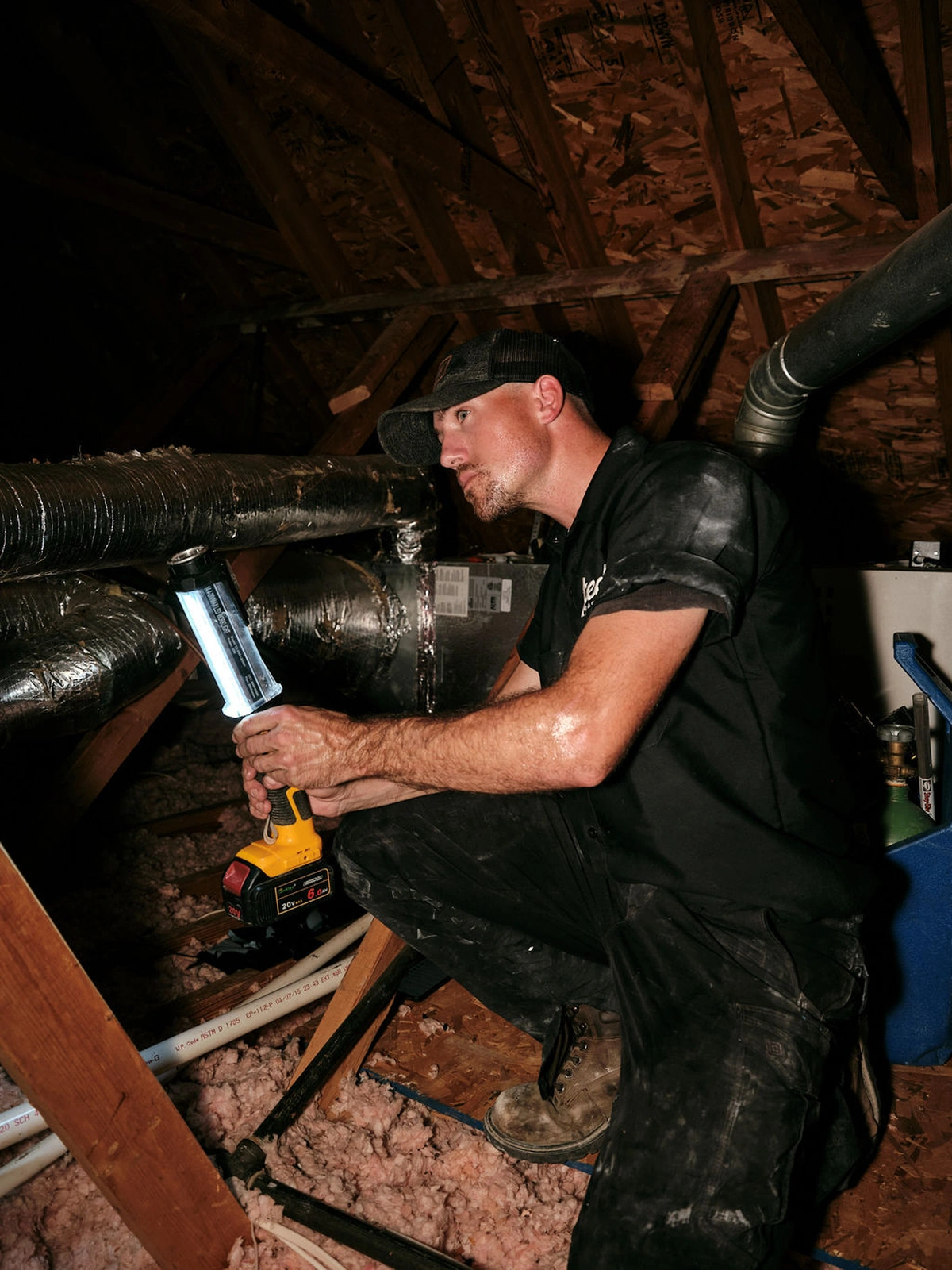
We Test the Duct System, Publish the Number, Then Seal What the Test Found
How a Duct Leakage Test Is Actually Performed
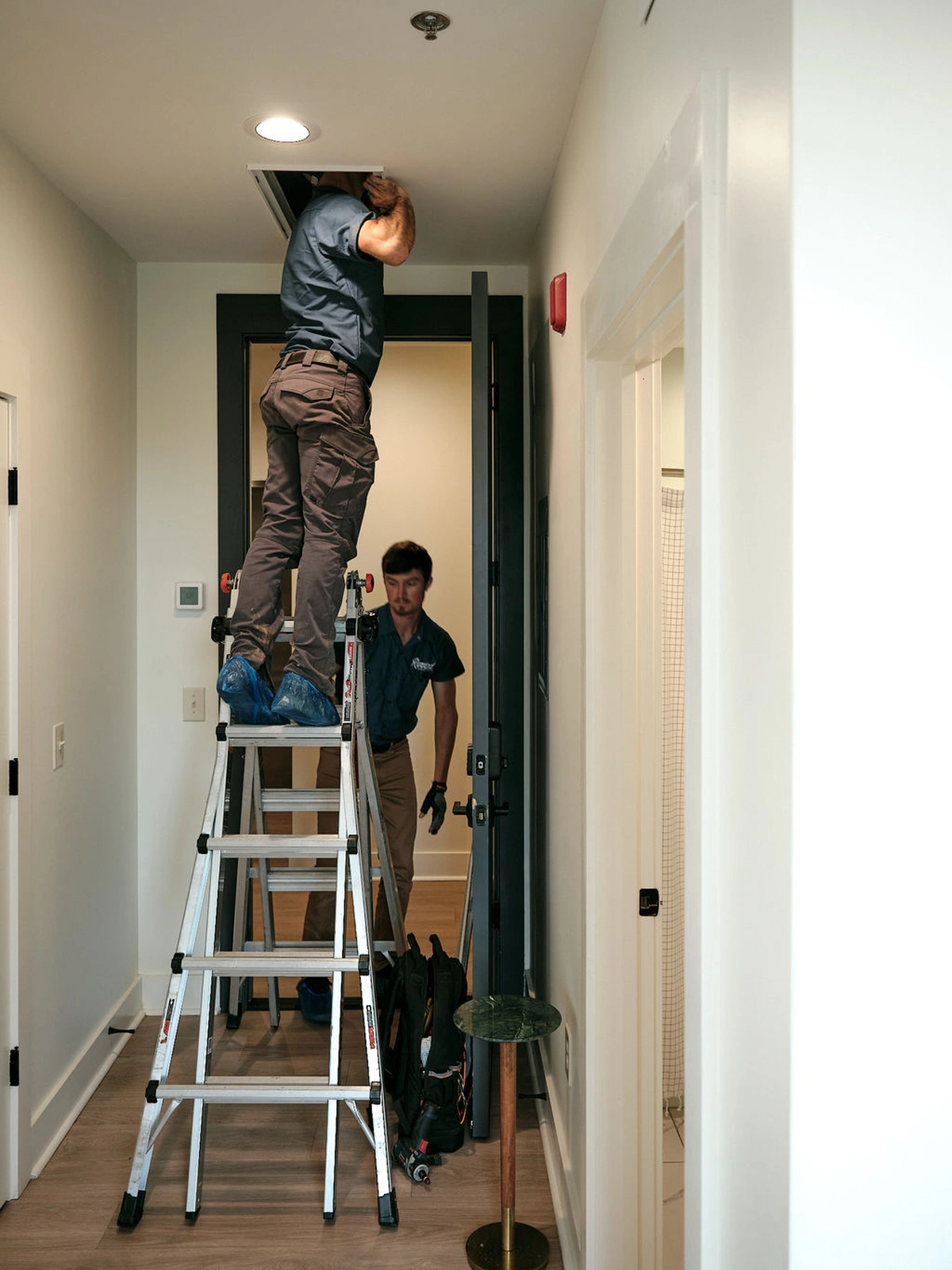
A duct leakage test is not an inspection and it is not a guess. We seal the registers and grilles temporarily, connect a calibrated fan to the duct system, and pressurize the ductwork to a reference pressure — the standard is 25 Pascals. The fan then has to supply exactly as much air as the ducts are losing in order to hold that pressure, so the airflow through the fan is the leakage rate, in CFM. That is the whole trick: the air escaping your ducts gets counted directly rather than estimated.
The raw CFM only becomes meaningful when it is compared to something, so we measure the system's actual airflow as well and express the leakage as a percentage of it. A duct system leaking a small fraction of what the blower moves is a system worth leaving alone. A system leaking a fifth or a quarter of its airflow is a system where a substantial share of the air never does the job it was moved to do. The reference point here is published rather than ours to invent: the energy code's yardstick for tight new ductwork is roughly 4 CFM of leakage at 25 Pascals per 100 square feet of conditioned floor area. We use that as a benchmark, not as a pass mark a 1960s Jackson house was ever built to hit — we tell you the number your system has, what it would take to move it, and we re-test after sealing so the improvement is a measurement rather than a claim.
Around that test we take the readings that put it in context, because leakage is rarely the only thing wrong with an airflow problem. Total external static pressure, read with a manometer across the air handler, tells us whether the system is fighting a restriction as well as a leak. Temperature rise or split across the coil tells us what the equipment is doing to the air. And measured delivered airflow against the equipment's rated airflow shows how much of the capacity you bought is arriving in the rooms.
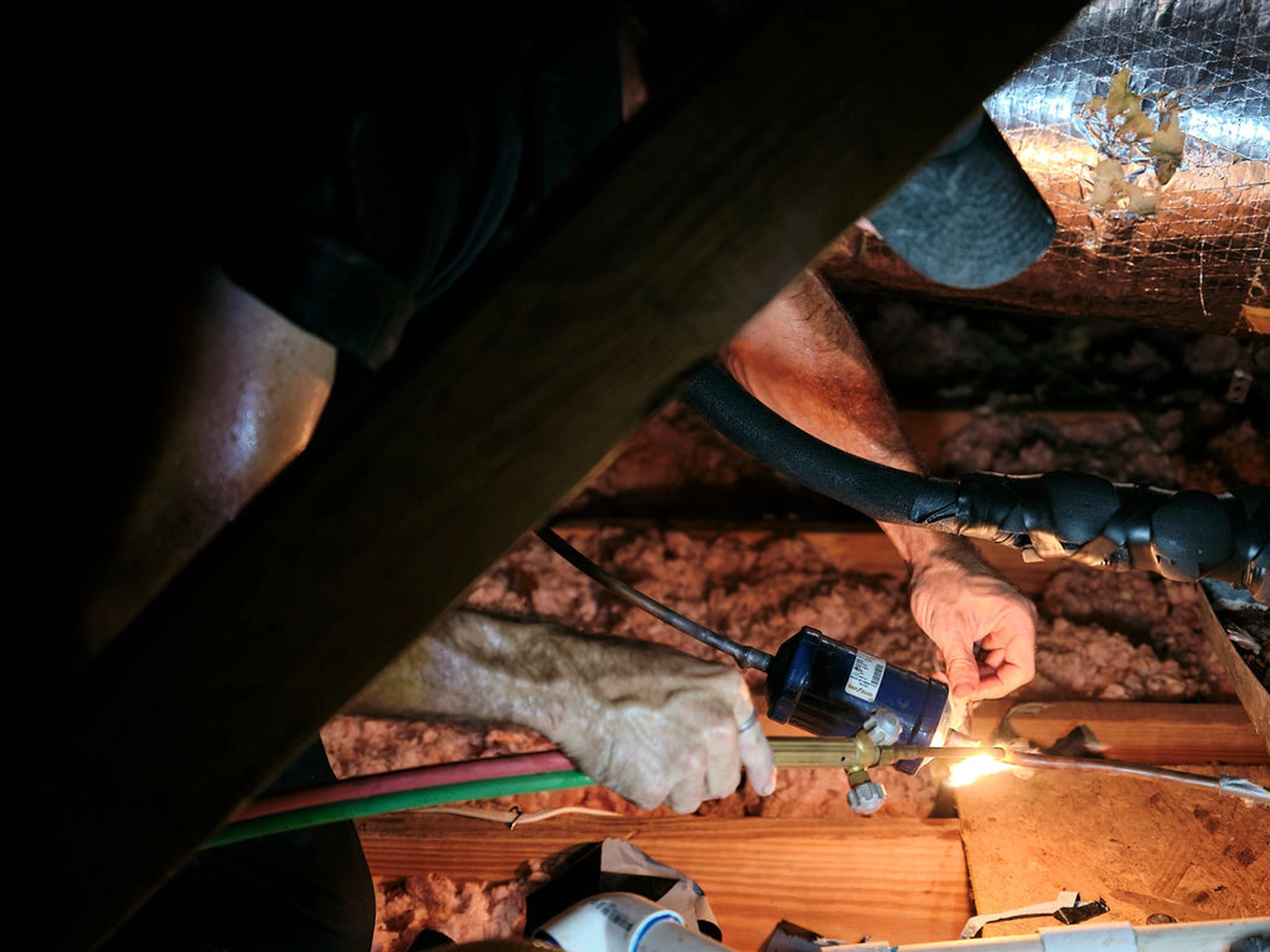
Then we seal — mastic and mechanical fasteners at the joints, boots, plenum connections, and return panel seams where the leakage is, working from the test rather than from habit. When the sealing is done we re-test, and if the number has not moved the job is not finished. Where rooms were badly out of balance to begin with, air balancing follows: measuring room-by-room CFM and adjusting the system so the delivered airflow lands where it was supposed to.
Our Duct Testing and Sealing Process: What Jackson Homeowners Can Expect
The order matters here more than almost anywhere else in this trade: test, then seal, then test again. A contractor who seals without measuring cannot tell you whether the work accomplished anything, and neither can you. We run the test with calibrated equipment during our posted hours, walk you through the leakage percentage and the readings that go with it, and let you decide with an actual number in front of you. If sealing is warranted we do it at the joints and boots where the leakage lives, then repeat the same test so the improvement is documented rather than described.
Easy Scheduling
Call or book online and we schedule the duct test during our posted hours — Monday through Friday 7am to 6pm, Saturday 9am to 5pm.
Baseline Duct Leakage Test
We pressurize the duct system to 25 Pascals with a calibrated fan and measure the leakage in CFM, then express it as a percentage of your measured system airflow.
Static Pressure, Airflow & Temperature Readings
Total external static pressure, delivered airflow versus rated airflow, and temperature rise across the coil — the context that tells us whether you have a leak, a restriction, or both.
Findings and Recommendation
You see the numbers and where the leakage is, with a straight recommendation that is allowed to be "this system is tight enough to leave alone."
Seal, Re-Test & Balance
Mastic and mechanical sealing at the joints, boots, and return seams the test identified — then the same test again, plus room-by-room air balancing where the airflow needs evening out.
Frequently Asked Questions
Why is duct testing important?
Because without it, every statement anyone makes about your ductwork is a guess — including ours. A duct leakage test converts the condition of a hidden system into one number: the air escaping the ducts, measured in CFM and expressed as a percentage of the airflow your system moves. That number tells you whether sealing is worth doing, where the work in the job actually is, and afterward whether it accomplished anything.
It also settles arguments the rest of the trade keeps having by feel. Rooms that will not cool get blamed on undersized equipment, humidity on the thermostat, dust on the filter. A leakage test plus a total external static pressure reading separates a leak from a restriction from a capacity problem in one visit.
What are the signs of leaky air ducts?
The common ones are: rooms at the end of long runs that never keep up in summer; equipment that runs continuously without satisfying the thermostat; a house that stays humid and clammy at a comfortable temperature; an attic smell when the system first starts; and fine dust reappearing at the supply registers within days of cleaning.
Every one of those also describes a failing or undersized air conditioner, which is why so many Jackson homeowners replace equipment and stay disappointed. The tell that points at ducts specifically is the return-side evidence — the attic smell, the fiber-looking dust at the registers, the humidity that will not come down. Those mean unconditioned air is being pulled into the system, not merely lost from it. That is an indoor air quality problem as much as a comfort one, and a test confirms it in a single visit.
How is duct leakage actually measured?
With a calibrated fan and a pressure gauge. We temporarily seal the supply registers and return grilles, connect the fan to the duct system, and pressurize the ducts to a reference pressure of 25 Pascals. To hold that pressure, the fan has to replace exactly the air that is escaping — so the airflow through the fan, read in CFM, is the leakage rate. Nothing is inferred.
The percentage is the part that matters. Leakage in CFM only means something next to the airflow your system actually moves, so we measure that too and divide — which is what makes the result comparable from house to house and from before sealing to after it. We can also isolate leakage to the outside — the portion escaping into the attic or crawl space rather than into the house — because that is the share doing the real damage.
Is duct sealing worth it?
On some houses clearly yes, on some houses clearly no, and the test is what tells them apart — which is the reason we test before we quote. We will not attach a savings figure or a payback estimate to it, because those numbers get invented in this industry far more often than they get measured.
What we will describe is the mechanism. Air lost from the supply side is conditioned air you paid for going into a 130°F attic instead of a bedroom; air pulled in through the return side is attic dust, insulation fiber, and humid unconditioned air entering the airstream your family breathes. Sealing stops both, and the re-test shows by how much. If your baseline test comes back tight, we will say so and you should spend your money elsewhere — that outcome happens, and it is why the test comes first.
What is the difference between duct sealing and duct cleaning?
Cleaning treats what is in the duct. Sealing treats what the duct does. They are separate services solving separate problems, and they are constantly sold as though they were the same one.
The practical consequence is worth understanding before you book either: a duct that got dirty because it leaks will get dirty again. Return-side leakage is a vacuum on the attic, so cleaning a leaking system removes the debris that is there today and leaves the mechanism that delivered it fully intact. Sealing addresses the mechanism. On plenty of Jackson homes the right sequence is to test first, seal what the test found, and then decide whether the ducts still warrant air duct cleaning at all — a question that page answers from the cleaning side, against the EPA's own as-needed criteria.
Can you seal ducts from the inside?
There are aerosol-based products marketed for interior sealing, and we do not lead with them. The EPA specifically cautions that the effectiveness and long-term safety of sealants applied inside duct systems has not been fully established, and we are not going to put a material inside the airstream your family breathes on the strength of a marketing claim.
Our default is mechanical and external: mastic and fabric-backed tape at the joints, mechanically fastened connections, and proper sealing at the boots, plenum takeoffs, and return panel seams the leakage test points to. It is slower attic and crawl-space work, but it is durable and you can see it. Where a run is beyond sealing — crushed, disconnected, or deteriorated — the honest recommendation is to replace that section rather than paint over it.
Do I need new ductwork or just sealing?
Sealing fixes a duct system that leaks. It cannot fix a duct system that was designed wrong, and telling those apart is a design question with a published answer: Manual D duct design, the industry standard for residential ductwork. Manual D sizes each trunk, branch, and return for the airflow that room needs at a static pressure the equipment can actually deliver against — it is the document that says what your ductwork should have been.
So we compare what you have against what Manual D would call for. A system with adequate duct sizing, a properly sized return, and reasonable static pressure that simply leaks is a sealing job. A system where the return is a single undersized hallway grille, where the branches were never sized for the rooms, or where total external static pressure sits far above what the equipment is rated to work against is a design problem — sealing it only tightens a layout that was never going to deliver the airflow anyway. Nobody in this market names Manual D, which is a strange thing to leave out of a conversation about spending money on ductwork.
How long does a duct test take?
The baseline test itself is typically under an hour on a normal single-system home: setting up the calibrated fan, temporarily sealing the registers and grilles, pressurizing to 25 Pascals, and recording the leakage. The static-pressure, airflow, and temperature-split readings add a little more, and then we walk you through the results before you decide anything.
Sealing is the longer half — an attic and crawl-space job measured in hours, depending on how much of the system is reachable and how many joints and boots need work. We schedule all of it inside our posted hours: Monday through Friday 7am to 6pm, Saturday 9am to 5pm, closed Sunday. If a job needs more time than one visit allows, we tell you that up front instead of rushing the sealing to fit the day.
Your Jackson Neighbors
The Company in Jackson That Publishes the Test, the Method, and the Number
Rooted Heating & Air is a family-owned Mississippi company serving Hinds, Madison, and Rankin Counties, run on Biblical principles of integrity and plain dealing. Duct testing is the clearest expression of that we have. It is a service that only works if the contractor is willing to be measured — the test produces a number before the work and a number after it, and both belong to you.
Our work is led by a National Comfort Institute (NCI)-certified technician credentialed in residential high-performance testing and air balancing. That training is specifically about instruments: measuring total external static pressure, verifying delivered airflow against rated airflow, reading temperature rise, and quantifying duct leakage rather than describing it. When we mapped this trade across eleven local companies, exactly one mentioned duct sealing at all, and not one of the eleven published a test method, a leakage threshold, or a number. Our homepage has said for years that we do not guess what is wrong, we measure it and fix it. This page is what that sentence means in practice.
We are Jackson neighbors, not a call center dispatching a crew through town. We document what we find with photos, explain the readings in language that does not require a trade background, and back the work with our Make-It-Right Guarantee. If your test comes back tight, you will not hear a sealing pitch. If it comes back badly, you will see exactly where the leakage is before you spend anything on it.
Serving Jackson, MS families
Integrity
We do what we say we are going to
Done right, 1st time
Job done right or we'll make it right
High quality work
No shortcuts , just proper fixes
Reasonable Prices
Upfront, honest pricing = win/win
What Duct Leakage Tests Turn Up Across Jackson
Jackson gives duct leakage every advantage. A large share of the metro's housing predates the era when duct sealing was standard practice, so those systems were assembled with fasteners and cloth tape and never sealed at the joints. The runs then spent decades in attics that clear 130°F in July, through a five-month cooling season, with the tape drying out and letting go and the flex crushed wherever anyone stored a Christmas tree. The Department of Energy has measured duct leakage in 90–100% of the homes it has tested, and original attic sheet metal in a Mississippi attic is the profile that puts a house at the wrong end of that range.
Summer humidity here running 70–80% is what turns a leaky return from an efficiency footnote into an air-quality problem. Negative pressure does not care what it pulls, so a house with unsealed return seams in the attic is continuously drawing hot, moist, unconditioned air and whatever is loose up there into the airstream. The equipment then spends its capacity re-conditioning attic air it was never asked to handle — which is why so many Jackson houses feel clammy at a thermostat setting that ought to be comfortable, and why the fix is on the duct side.
A representative Jackson test for us looks like this: a homeowner who has already replaced the outdoor unit and is frustrated that the back bedrooms still will not cool. The leakage test comes back high, the total external static pressure reading is well above what that equipment is rated to work against, and the measured delivered airflow is nowhere near the unit's rated airflow. Sealing the plenum joints, the boots, and a return panel seam that had been open since installation moves the leakage number substantially, and balancing the branches evens out the back of the house. The equipment was never the problem. Nobody had measured, so nobody knew.
Sherwood Forest
Post-war and 1950s–60s ranch homes with original attic sheet metal and cloth-taped joints that have long since let go. This is the profile where a baseline leakage test most often comes back at the high end, and where sealing the plenum and boots moves the number the most.
Presidential Hills
1960s–70s stock with long attic branch runs out to the far bedrooms and returns that were undersized for the equipment installed later. Here the leakage number has to be read alongside total external static pressure, because leakage and restriction are usually both in play.
LeFleur East
Mid-century homes where later equipment upgrades were tied into the original duct layout without the ductwork ever being re-sized. Comparing what is there against Manual D duct design is often the more useful conversation than sealing alone.
Ready for Reliable Comfort? We're Just a Call Away!
Don't let comfort problems linger - your home deserves better, and so do you!