
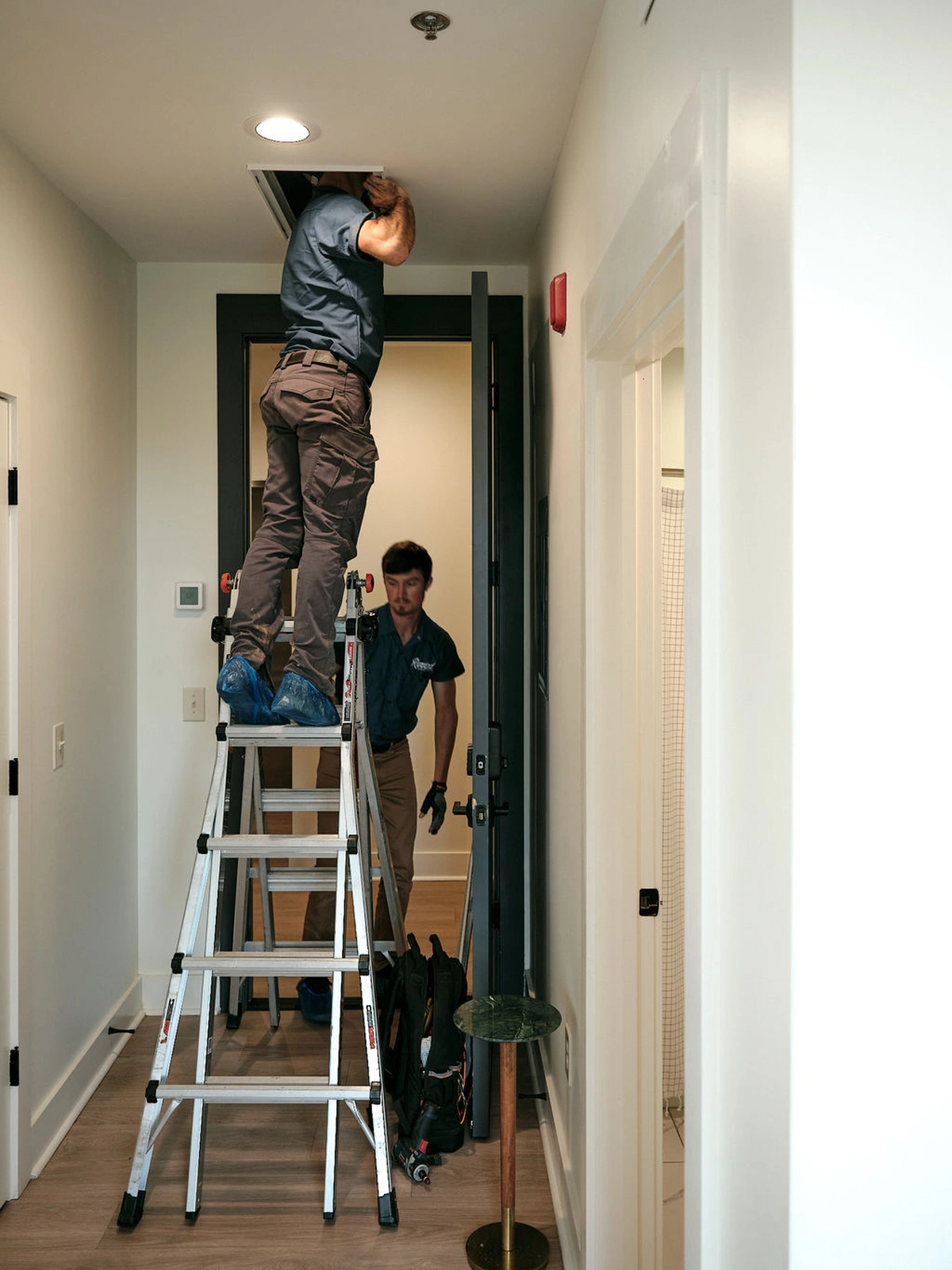
Air Duct Cleaning in Jackson, MS
Most Jackson homes do not need their ducts cleaned every year. Some genuinely do. The only way to know which house you have is to open the system, look inside it, and measure what the air is actually doing — which is where Rooted Heating & Air starts every duct job. We inspect, we document what we find with photos and video, and we take airflow and static-pressure readings before anyone quotes you a cleaning. If the ducts are clean and the airflow is fine, we will tell you that and charge you for the inspection instead of the cleaning. Family-owned, measured, and honest enough to talk you out of work you don't need.
- Inspection and airflow measurement before any cleaning is recommended
- Photo and video of what is actually inside your ducts, not a sales pitch
- NCI-certified diagnostics — static pressure measured, not estimated
- A straight answer when the honest recommendation is to leave them alone
Request Service Quote!
How can we help you?
Mission-Driven Service From People Who Actually Care!
your trusted local HVAC experts
Delivering high-value Air Duct Cleaning services to our metro Jackson, MS communities
Fast Response Times
Same-day service to quickly meet your Air Duct Cleaning needs
certified & experienced
NCI-certified diagnostics and years of hands-on experience
honest pricing
Transparent, upfront pricing with no hidden costs.
family-owned & operated
Biblically-based business with a focus on integrity and care.
Why the Honest Answer Depends on the House
Duct Cleaning Is the Most Oversold Service in HVAC — and Jackson Still Has Homes That Need It
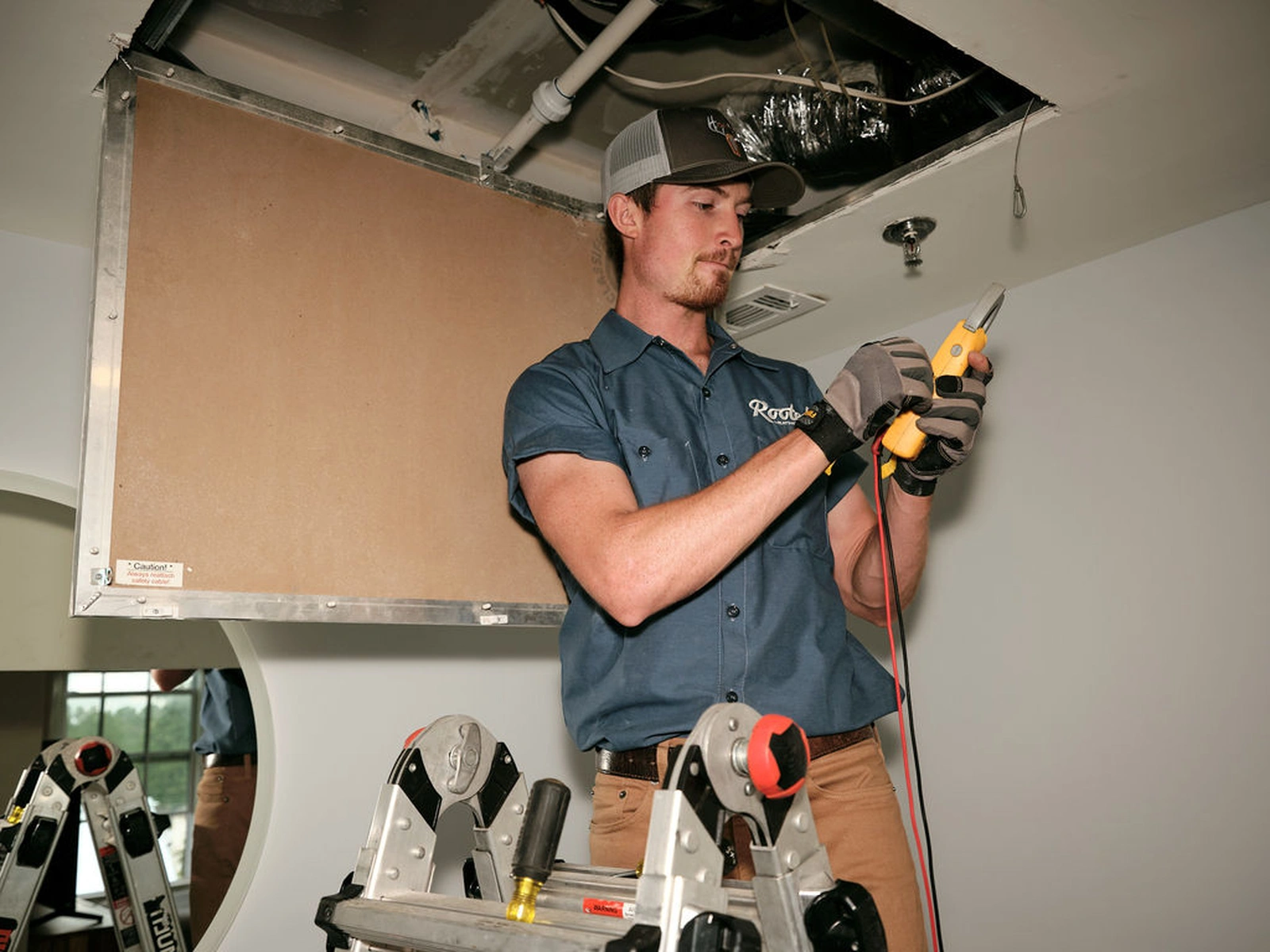
The Environmental Protection Agency's published guidance on this is blunter than most contractors will repeat: the EPA does not recommend that air ducts be cleaned routinely, only as needed, and it notes that duct cleaning has never been shown to actually prevent health problems. That is the agency's own position, and we are not going to pretend otherwise to sell a service. The EPA does identify conditions that warrant cleaning — substantial visible mold growth inside the ducts or on other system components, ducts infested with vermin, or ducts so clogged with dust and debris that particles are visibly released into the home. Those are real triggers, and they are checkable.
What makes Jackson different from the national average is how often local homes actually hit them. The core neighborhoods run from the 1920s through the 1970s, and a great many still move air through the original sheet metal — laid across attics that break 130°F in July, crushed at the boots, and never sealed. The Department of Energy has measured duct leakage in 90–100% of the homes it has tested. A duct system that leaks is also a duct system that pulls: negative pressure on the return side draws attic dust, insulation fiber, and humid unconditioned air straight into the airstream through every open seam. Add Mississippi's humidity load and pollen season, and you have the conditions under which a duct system genuinely does foul.
The result is a service where the marketing and the reality have completely parted ways. Homeowners get flat-rate whole-house specials advertised at a price that cannot fund a real cleaning, performed by crews with a shop vac and a schedule to keep — and homeowners with genuine mold or a rodent problem in the ducts get the same twenty-minute visit as the neighbor whose system is spotless. Neither one gets an answer. Meanwhile the thing that is usually making the house dusty, stuffy, and expensive to cool is not dirt in the ducts at all: it is a restriction, a leak, or a return that was undersized the day it was installed. Nobody finds that without a manometer.
Don't Delay - We're Here to Help!
You Can Dust on Saturday and See It Back on Sunday — and Nobody Has Told You Why
- Dust settles back onto the furniture within a day of cleaning, and it seems to come from the registers rather than the windows.
- One or two rooms are always stuffier than the rest of the house, no matter where the thermostat is set.
- The house smells musty when the system first kicks on, then fades — a smell you have stopped noticing and guests have not.
- Someone in the house has a rougher allergy season indoors than out, and HouseFresh ranked Jackson the worst major U.S. city in the country for indoor allergies in 2025.
- You have seen the flat-rate whole-house duct cleaning ads and you cannot tell whether it is a real service or a foot in the door — so you have done nothing for years, which is its own kind of answer.

Rooted Heating & Air Inspects and Measures Your Ducts Before Recommending Anything
Look First, Measure Second, Clean Only If It Is Warranted
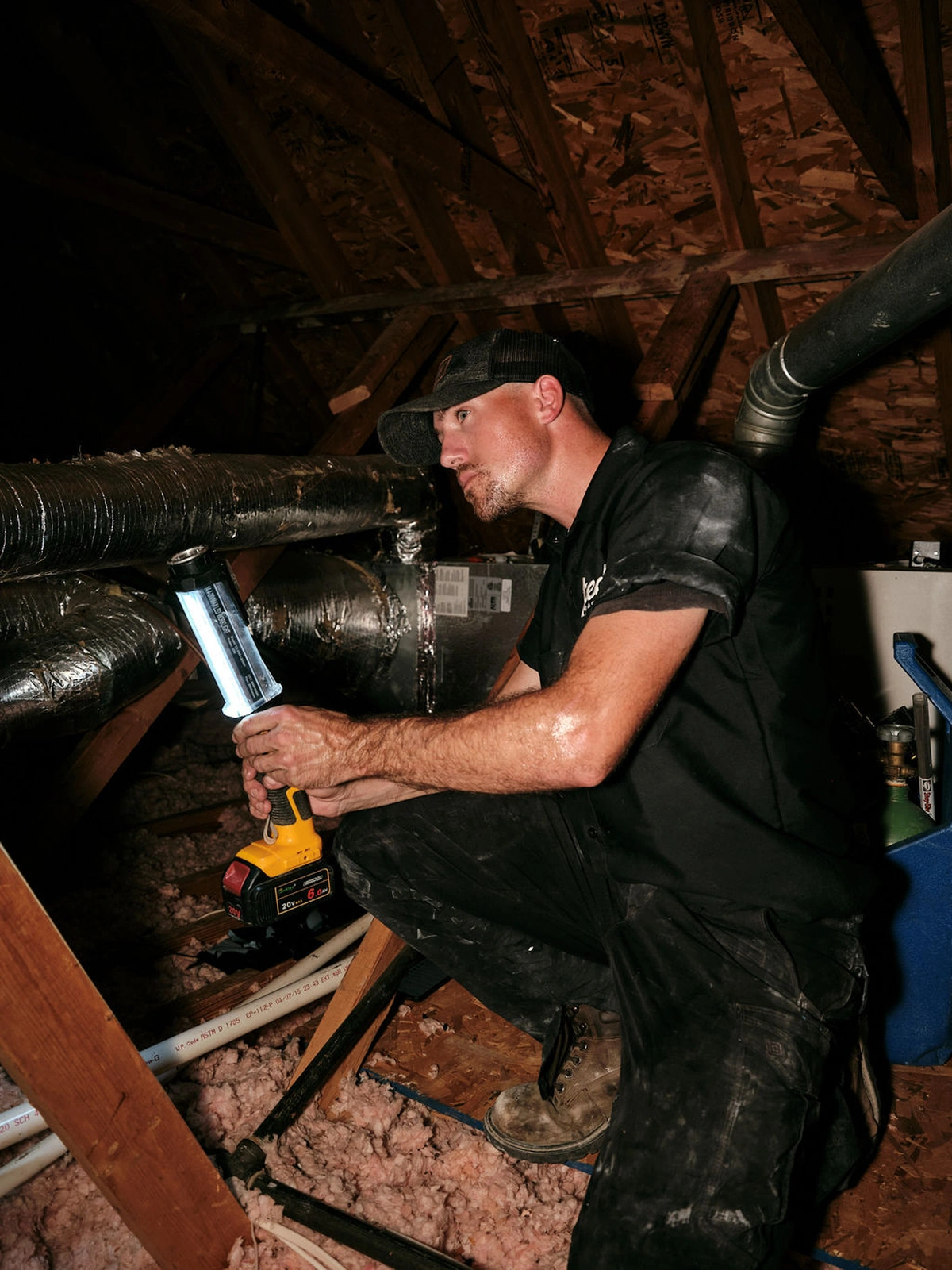
Every duct job we take starts the same way, and it does not start with a vacuum. We open the system, put a camera into the trunk and the branches, and photograph what is actually in there — because "your ducts are filthy" is a claim, and a picture of your own return plenum is evidence. At the same time we put a manometer on the system and read total external static pressure, check airflow across the coil, and look at the filter and return sizing that set the whole airflow picture. Those readings are the difference between a duct system that is dirty and a duct system that is restricted, and the two look identical from the hallway.
Then you get the finding in plain language, including the finding you may not expect. If the ducts are clean, we say so and we do not clean them — and we tell you what the readings suggest is actually causing the symptom, whether that is a loaded filter, an undersized return, a crushed boot, or leakage bleeding conditioned air into a 130° attic. If the ducts do meet the conditions that warrant cleaning, we show you the photographs, explain what cleaning will and will not fix, and do the work as source removal rather than a quick pass with a hose.
Where duct cleaning tends to disappoint people is that it treats the symptom and leaves the cause. A duct that is dirty because it is leaking will be dirty again, because the leak is what draws attic dust into it. So when the readings point that way, sealing comes with the conversation — not as an upsell but as the reason the cleaning holds. That is the same measured, old-fashioned habit our Jackson neighbors get from us on a tune-up or an install: find the real cause, fix that, and verify it with a number afterward rather than a promise.
Our Air Duct Inspection and Cleaning Process: What Jackson Homeowners Can Expect
We treat duct cleaning as a diagnosis before it is ever a service, because that is the only way to give you an honest answer about a job the whole industry oversells. You get a real inspection of the inside of your duct system, airflow and static-pressure readings taken with instruments rather than estimated by eye, photographs and video of what we find, and a recommendation that is allowed to be "leave it alone." If cleaning is warranted, it is done as source removal — the debris comes out of the house, it is not just pushed around inside it. We work during our posted hours, we treat your Jackson home like our own, and we write down what we measured so you can hold us to it.
Easy Scheduling
Call or book online and we schedule the inspection during our posted hours — Monday through Friday 7am to 6pm, Saturday 9am to 5pm.
Camera Inspection
We open the system and put a camera into the plenum and branch runs, photographing the actual condition of your ducts rather than describing it.
Airflow & Static Pressure Readings
A manometer goes on the system to read total external static pressure and airflow across the coil, separating a dirty duct system from a restricted one.
The Honest Recommendation
You see the photos and the numbers, and you get a straight call — including "these do not need cleaning" when that is what the evidence shows.
Source-Removal Cleaning & Verification
If cleaning is warranted we do it as source removal, address any leakage that will re-foul the system, and re-measure afterward so the result is a number, not a claim.
Frequently Asked Questions
Does my Jackson home actually need its air ducts cleaned?
Will duct cleaning fix my allergies?
What is the difference between duct cleaning and duct sealing?
Why do you measure static pressure on a duct cleaning call?
How often should air ducts be cleaned?
What about the cheap whole-house duct cleaning specials I see advertised?
Do you use chemicals, sanitizers, or foggers in the ducts?
What does the visit look like, and how long does it take?
Your Jackson Neighbors
Family-Owned, Measurement-Led, and Willing to Tell You Your Ducts Are Fine
Rooted Heating & Air is a family-owned Mississippi company serving Hinds, Madison, and Rankin Counties, and we built the business around Biblical principles of integrity and straight dealing. Duct cleaning is where that gets tested. It is the easiest service in this trade to sell dishonestly — the customer cannot see inside their own ducts, the complaint is vague, and a confident story about what is up there is usually enough. We decided a long time ago that if we cannot show it to you in a photograph and back it with a reading, we do not get to charge you for it.
Our work is led by a National Comfort Institute (NCI)-certified technician holding Residential High-Performance and Air-Balance certifications — training built specifically around testing airflow, static pressure, and duct leakage instead of estimating them. That is unusual in this market. Across the eleven local companies we studied while mapping this trade, not one publishes a static-pressure reading, an airflow measurement, or a duct-leakage figure anywhere on their site. Measurement is the whole reason our recommendations differ from the standard pitch, and it is the reason we can afford to say no to work.
We are Jackson neighbors, not a call center routing a crew through town. We document every visit with photos and video, we quote honestly and without pressure, and we back our work with our Make-It-Right Guarantee. If we inspect your ducts and they are clean, you will hear that plainly, along with what the numbers say is actually behind the symptom that made you call. That is a worse day for our invoice and a better one for your trust, and we have found that trade works out over time.
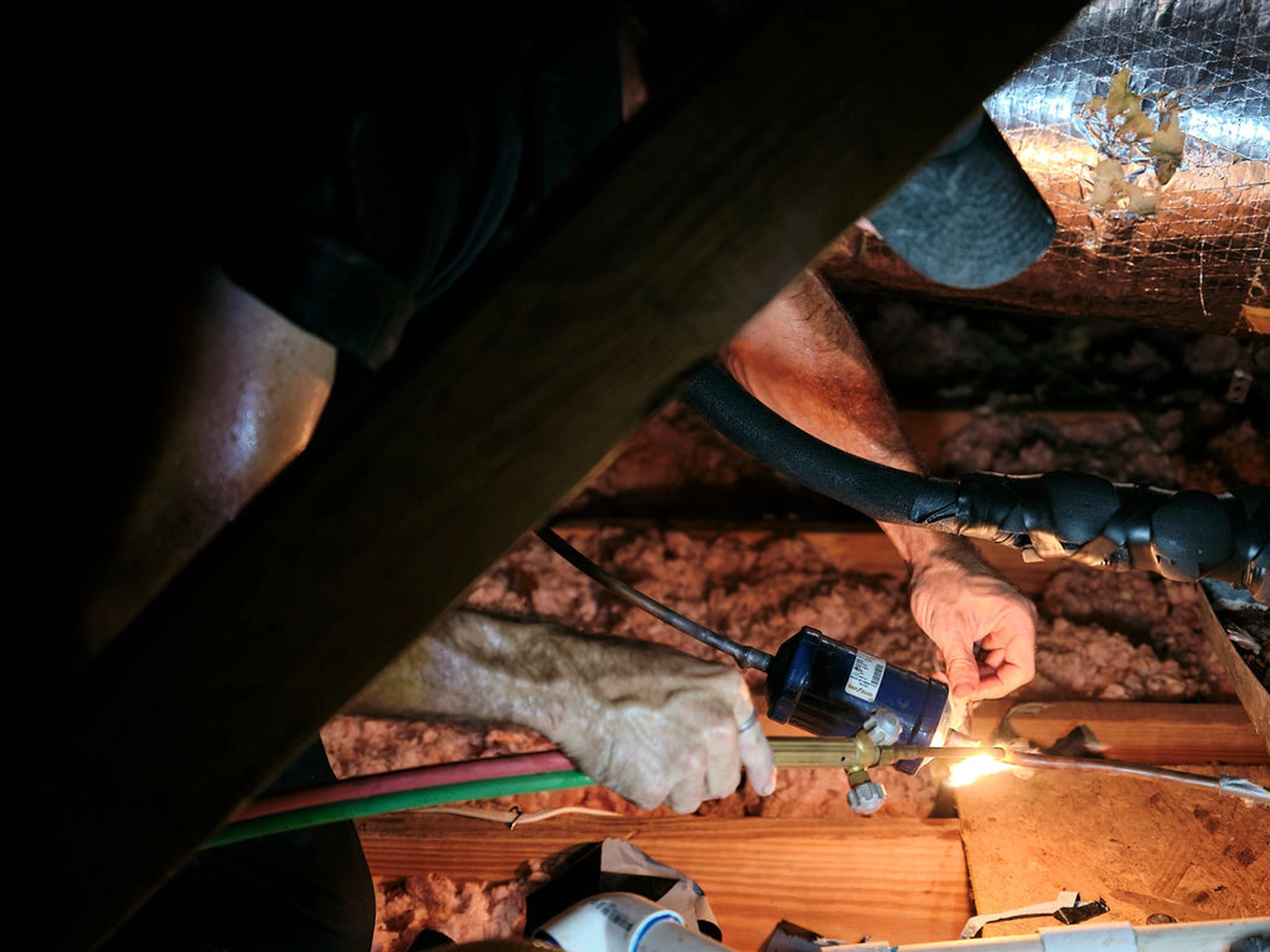
Serving Jackson, MS families
Integrity
We do what we say we are going to
Done right, 1st time
Job done right or we'll make it right
High quality work
No shortcuts , just proper fixes
Reasonable Prices
Upfront, honest pricing = win/win
What Duct Inspections Turn Up Across Jackson
Jackson's housing stock is the reason this service is worth doing properly here. The core neighborhoods run from the 1920s through the 1970s, and a large share of them still condition the house through the original attic sheet metal — installed before duct sealing was standard practice, crushed at the boots after decades of foot traffic, and sitting in a space that clears 130°F in July. The Department of Energy has measured duct leakage in 90–100% of the homes it has tested, and older Jackson stock sits squarely in that range. Leakage is not just wasted cooling; on the return side it is a vacuum pulling attic dust and insulation fiber directly into the air you breathe.
The climate compounds it. Jackson runs a five-month cooling season against summer humidity in the 70–80% range, which keeps duct surfaces near dew point for months at a time, and any organic debris that lands there has what it needs. HouseFresh ranked Jackson the worst major U.S. city in the country for indoor allergies in 2025 — a ranking driven by the outdoor pollen load as much as anything indoors, but the path from one to the other runs through a leaky return. This is a metro where the EPA's as-needed triggers get met more often than the national guidance would suggest, which is precisely why looking beats guessing in either direction.
A typical Jackson duct call for us goes like this: a Belhaven or Fondren homeowner who dusts constantly and cannot stay ahead of it, convinced the ducts must be filthy after seeing an ad. We put a camera in and the trunk line is honestly not bad — but the manometer reads high static pressure, and the return is a single undersized grille in a hallway, pulling hard enough through an unsealed boot to draw attic insulation into the airstream. Cleaning that system would have looked like a solution for about three weeks. Sealing the return and correcting the restriction fixed the dust, and the ducts never needed touching.
Belhaven
Pre-war homes with duct runs added long after the house was built, often threaded through tight attic and crawl spaces. Inspection here more often finds crushed runs and open seams than genuine filth — a distinction that changes the recommendation entirely.
Fondren
Mid-century homes whose returns were sized for a different era of equipment. High static pressure and a hard-pulling unsealed return are the usual finding, and they explain the dust complaint better than the duct condition does.
Broadmoor
1950s–70s ranch stock running original attic sheet metal above a 130°F summer attic. This is where the EPA cleaning triggers genuinely do turn up, and where the photographs make the case without anyone needing to take our word for it.
Ready for Reliable Comfort? We're Just a Call Away!
Don't let comfort problems linger - your home deserves better, and so do you!