
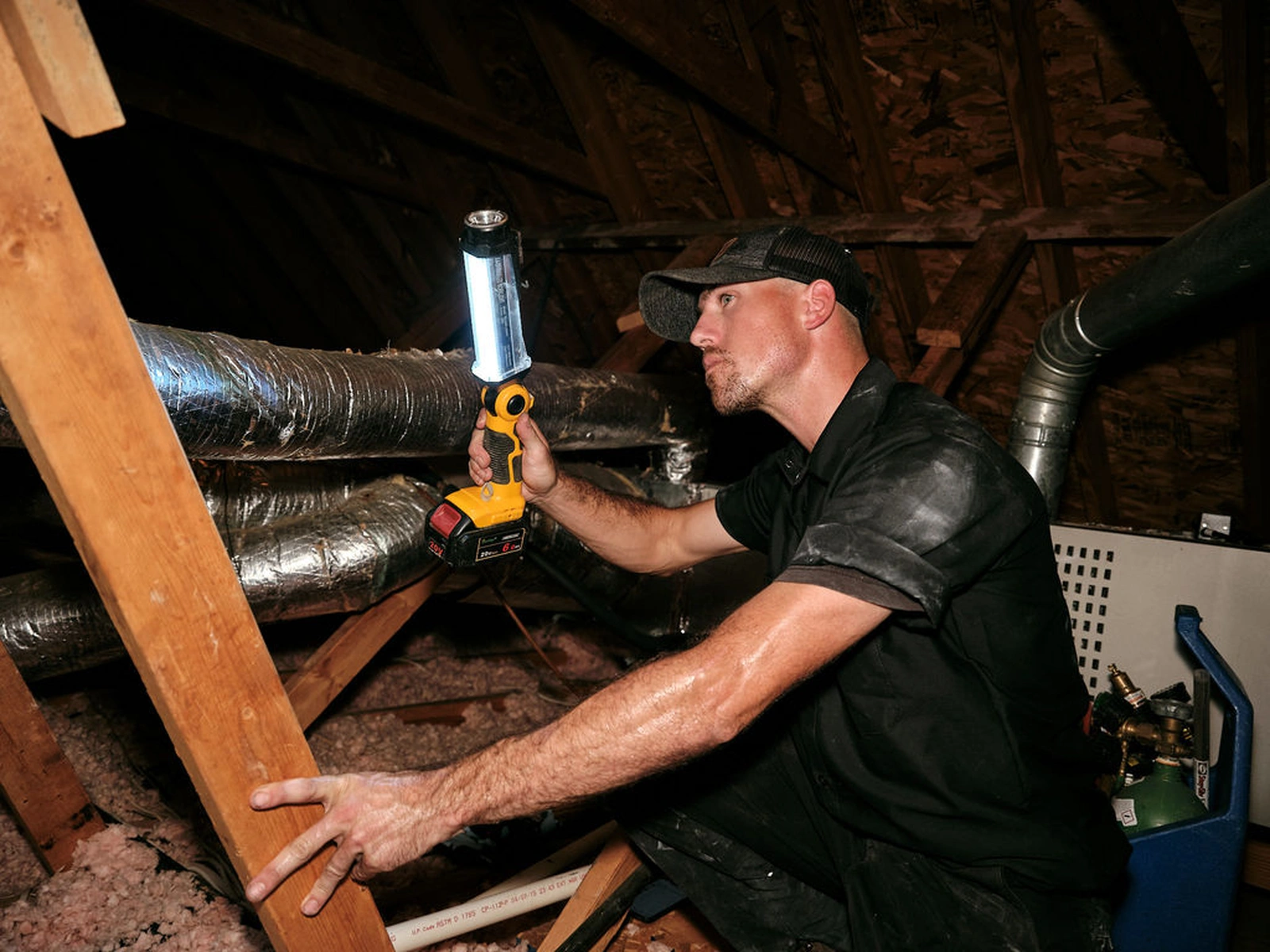
Indoor Air Quality in Jackson, MS
You cannot fix air you have not measured. Every other answer to indoor air quality in Jackson begins with a product — a purifier, a lamp, a thicker filter — bolted onto a system nobody has put an instrument on. Rooted Heating & Air begins with the machine that moves your air: total external static pressure on a manometer, airflow across the coil in CFM, temperature rise, duct leakage as a percentage, relative humidity read against dew point. Those readings tell us how much of the capacity you paid for is reaching your rooms, and what is riding along with it. Then, and only then, does anyone talk about equipment.
- Total external static pressure and airflow measured on your system, not estimated
- Duct leakage percentage and humidity read against a below-50% setpoint
- NCI-certified diagnostics — delivered capacity compared to rated capacity
- Filtration, ventilation, and dehumidification recommended last, after the readings
Request Service Quote!
How can we help you?
Mission-Driven Service From People Who Actually Care!
your trusted local HVAC experts
Delivering high-value Indoor Air Quality services to our metro Jackson, MS communities
Fast Response Times
Same-day service to quickly meet your Indoor Air Quality needs
certified & experienced
NCI-certified diagnostics and years of hands-on experience
honest pricing
Transparent, upfront pricing with no hidden costs.
family-owned & operated
Biblically-based business with a focus on integrity and care.
The Gap This Page Exists to Close
Jackson Has Labs That Test Your Air and Companies That Sell You a Box. Nobody Measures the Machine in Between.
Search for indoor air quality in this metro and you find two industries that never speak to each other. On one side, environmental laboratories and mold inspectors: they sample, they analyze, they hand you a report naming what is in your air. On the other, companies selling equipment — a purifier, an ultraviolet lamp, a media cabinet. Both are real work. But a report tells you what is in the air and stops; a catalog tells you what to bolt on and stops. Neither puts an instrument on the appliance that pulls the entire air volume of your house through itself several times an hour, drives it across a cold coil, and returns it through sheet metal lying in an attic that clears 130°F in July. That appliance holds your filter, holds your coil, and connects to every duct in the house, and it is the one variable nobody here is measuring.
The reading that reframes the whole conversation is delivered versus rated capacity. Your equipment carries a rating on its data plate — so many tons, so much airflow, a specific moisture-removal characteristic at a design condition. That is the laboratory number. What your house actually receives is a smaller one, and the difference is spent on restriction, leakage, and bad duct geometry. A system choked well under its rated airflow does not merely cool slowly: it runs a colder, wetter coil, removes moisture unevenly, and pulls harder through every unsealed seam on the return side while it does it. Almost nobody knows their delivered figure, because nobody has ever handed it to them.
Jackson widens the gap. The Department of Energy has measured duct leakage in 90–100% of the homes it has tested, and this metro is full of the stock that produces it — original attic sheet metal, returns sized for equipment that left the market decades ago, boots crushed by fifty years of foot traffic. The cooling season runs roughly five months against summer humidity in the 70–80% range, so latent load stays high long after the thermostat is satisfied. HouseFresh ranked Jackson the worst major U.S. city for indoor allergies in 2025. Those are the conditions. Guessing at them with a product is not a strategy.
Don't Delay - We're Here to Help!
The Symptoms Are Specific. The Answers You Have Been Given Are Not.
- The house always feels dusty. You clean on Saturday and there is a film back by Sunday, and it seems to arrive from the registers rather than the windows.
- One room is never comfortable — the bonus room, the addition, the bedroom over the garage. No thermostat setting has ever fixed it.
- The house feels muggy and clammy even when the thermostat is satisfied: 72 on the display and still sticky, because the temperature came down and the moisture did not.
- The system runs almost constantly through July and August and still never quite gets ahead of the house.
- A musty smell arrives for the first minute after the system kicks on, then fades — one you have stopped noticing and your guests have not.
- Someone in the family has a rougher allergy season indoors than out, in a metro HouseFresh ranked worst in the country for indoor allergies in 2025.
We Measure the System First. Equipment Is the Last Step, Not the First.
Diagnosis Before Hardware — Every Time
A purifier installed on a system with high static pressure and a leaking return treats a symptom while the cause keeps running. So we invert the order. Before any product is discussed we establish four things with instruments: how hard the blower is fighting (total external static pressure), how much air actually crosses the coil (CFM), how much of the rated capacity reaches your rooms (temperature rise and split), and how much escapes into the attic on the way (duct leakage percentage). Alongside those we log relative humidity and dew point, because comfort at a satisfied thermostat is a moisture question, not a temperature one.
Only then does hardware come up, in order. Start with the evaporator coil. A coil furred over with the fine dust that slips past an ill-fitting filter is a restriction first and a soiled surface second: it raises static pressure, drops airflow, pushes coil temperature toward the point where the system runs cold and wet, and degrades moisture removal while the compressor keeps working. Coil cleaning is one of the few pieces of IAQ hardware work that shows up directly in the numbers. If your coil is clean, we say so and leave it alone.
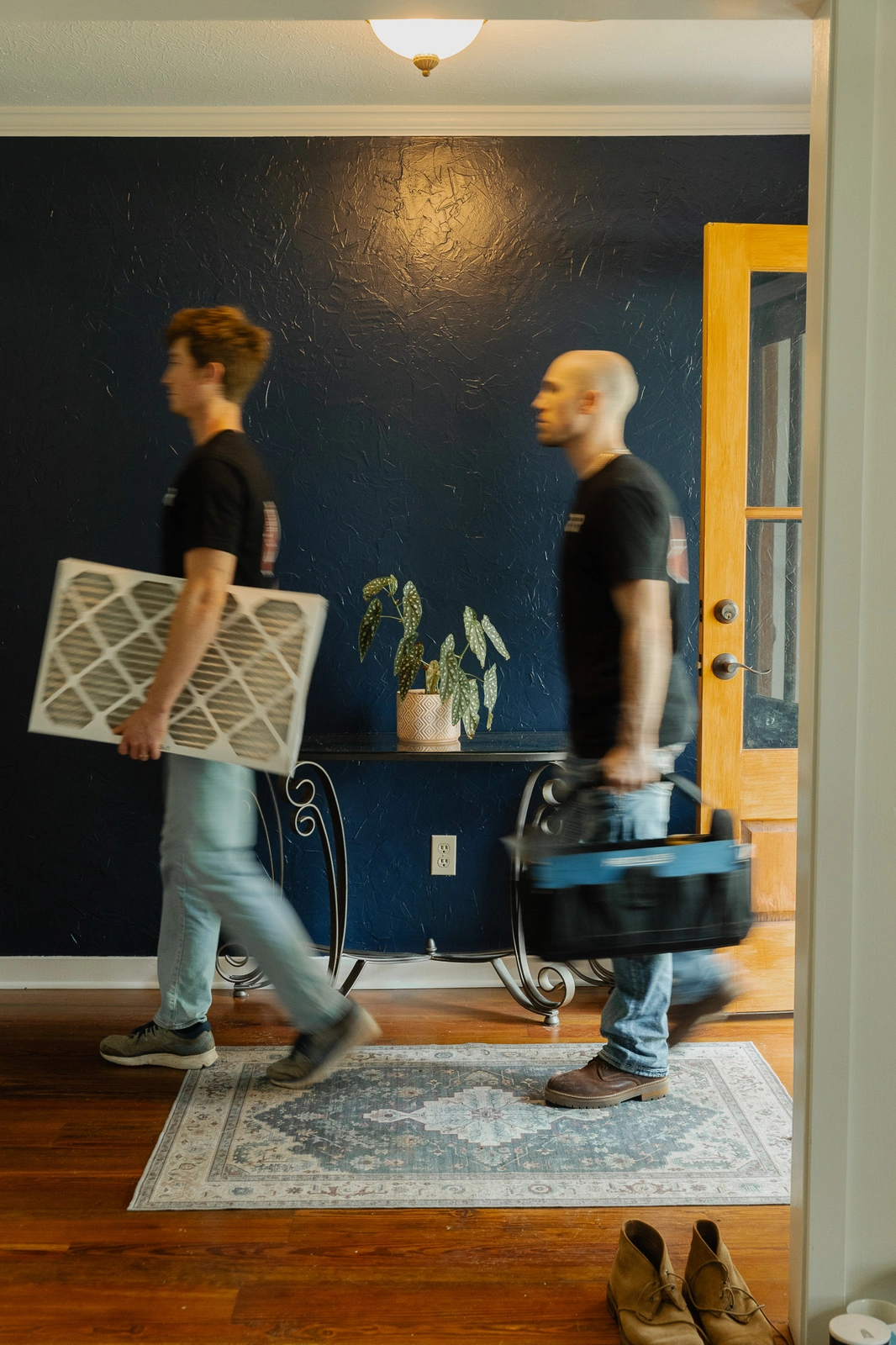
Then filtration, where the trade-off gets left out. Every increase in filter efficiency brings an increase in pressure drop, so a high-efficiency filter dropped into a one-inch slot on a system already over its rated static pressure reduces the air reaching your rooms rather than cleaning it better — a filter only captures what genuinely passes through it. The fix is usually geometry: adequate filter area, a properly sized return, a cabinet that seals. Ultraviolet lamps belong in the same honest frame. The defensible mechanical use of a coil-mounted lamp is keeping a permanently wet coil and drain pan clear of the growth that accumulates through a Mississippi summer — an airflow argument, visible on a manometer. We attach no health outcome to any of this equipment.
Ventilation is the piece almost nobody here discusses, and the one where doing it wrong is worst in Mississippi. The mechanical answer to pollutant concentration is dilution with measured outdoor air rather than whatever leaks through the building shell. A heat recovery ventilator (HRV) exchanges heat between the incoming and outgoing streams; an energy recovery ventilator (ERV) transfers heat and moisture. That distinction matters here, because unconditioned July air arrives at a dew point in the low-to-mid seventies and hauls a latent load straight indoors. Sizing either requires the load calculation.
Humidity is last, and it is what most often explains "cold but clammy." Air conditioning removes moisture as a side effect of removing heat, so the two loads are only coincidentally matched. An oversized system satisfies the thermostat quickly, shuts off, and never runs long enough at a wet coil to bring moisture down — which is why a house can sit at 72 degrees and 60% relative humidity and feel worse than a smaller system holding 74 and 45%. We measure relative humidity and dew point and work toward a setpoint below 50%. Sometimes the fix is airflow and run-time; sometimes it is a whole-home dehumidifier carrying latent load independently through the long Jackson shoulder seasons. Whole-home humidification is a real need in cold, dry climates and an uncommon one here.
Our Indoor Air Quality Diagnostic: The Measurements, In Order
This is the sequence, and it runs the same way every time because it is the order in which the readings mean something. You get instruments on your system rather than an opinion about it, and a recommendation that names the measurement it came from. Nothing is sold before the diagnosis, and the diagnosis is allowed to conclude that your equipment is fine and the ductwork is the problem — which, in this metro, it frequently is.
Scheduling & the Walk-Through
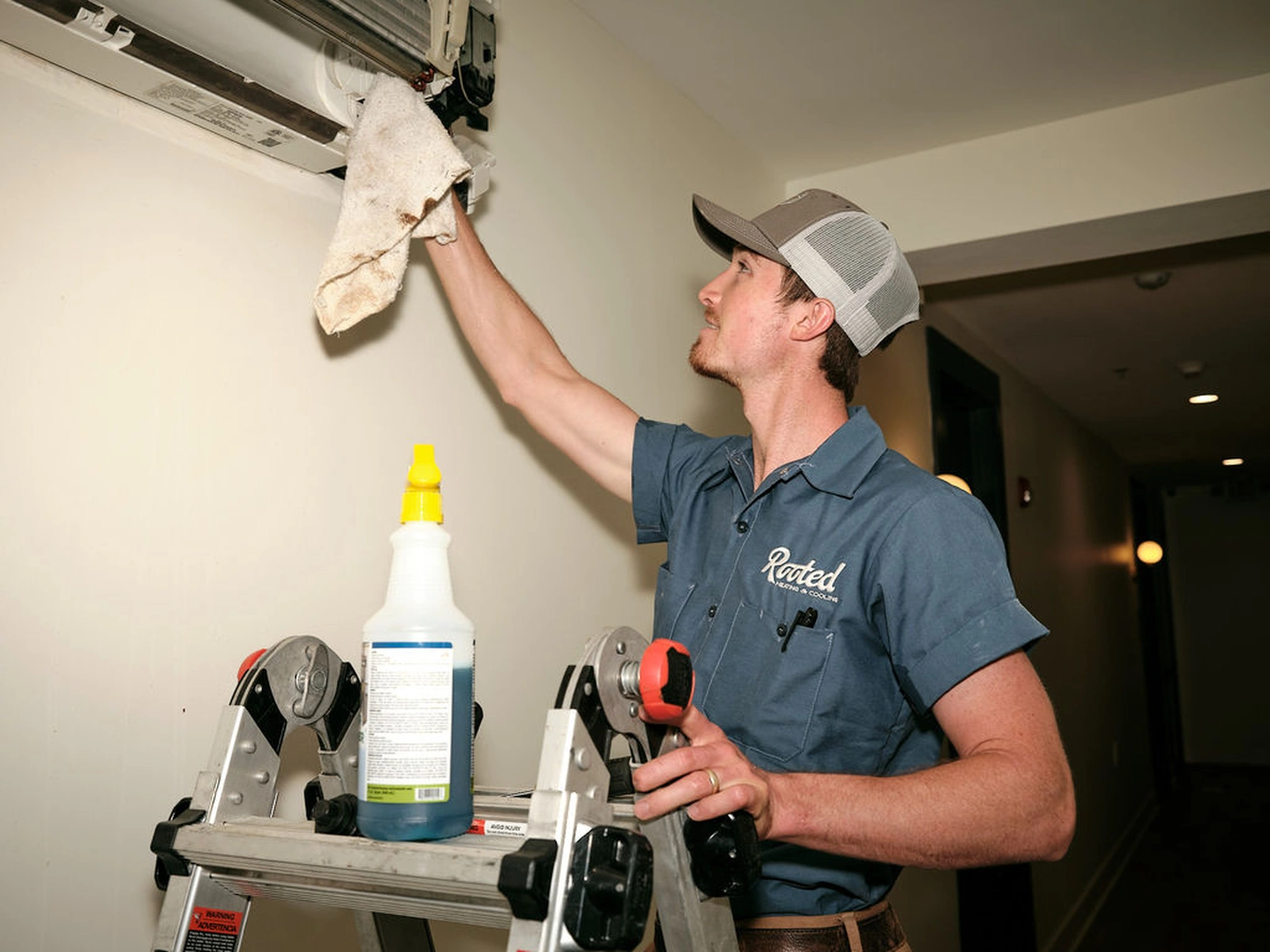
Call or book online and we schedule during our posted hours — Monday through Friday 7am to 6pm, Saturday 9am to 5pm. We walk the house with you first: which rooms fail, when, and what happens at night versus midday.
Total External Static Pressure
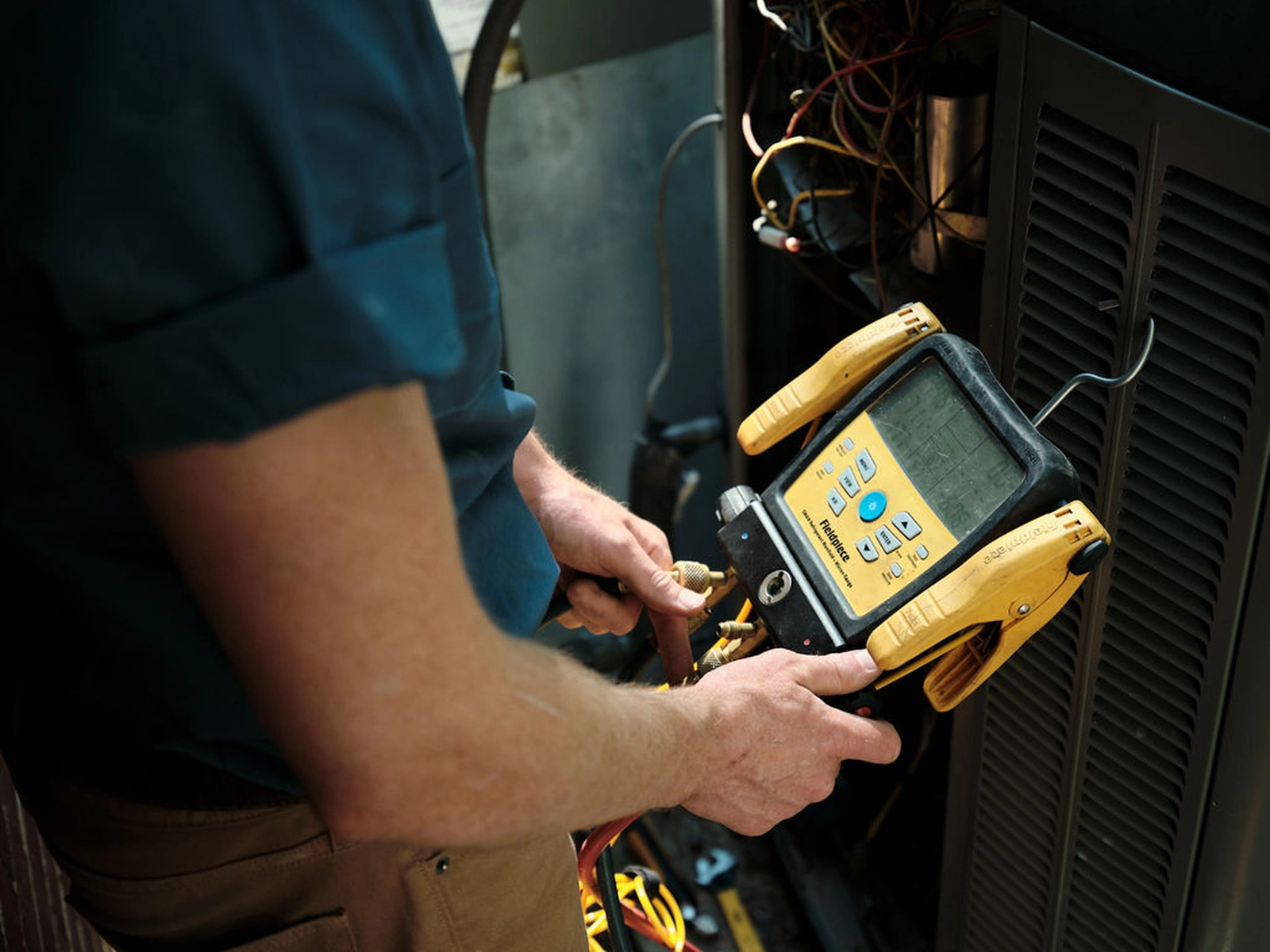
A manometer goes across the air handler to read the resistance the blower is fighting. Most residential equipment is rated for roughly half an inch of water column, and a large share of the systems we test read well above it.
Airflow Across the Coil (CFM)
We measure how much air actually crosses the evaporator coil rather than assuming the blower produces its nameplate. Airflow short of target turns a healthy system into a cold, wet, underperforming one, and it is invisible without the measurement.
Temperature Rise & Split — Delivered vs Rated Capacity
Temperature rise in heating and temperature split in cooling, read alongside the airflow, tell us how much of the capacity on the data plate is reaching your rooms. This gap between delivered and rated capacity is the figure the rest of the market never gives you.
Duct Leakage Percentage
We test the duct system and express the loss as a percentage of system airflow, so it is a comparable figure rather than an adjective. The Department of Energy has measured duct leakage in 90–100% of homes tested, and leaking returns are what draw attic dust and humid unconditioned air into your airstream.
Relative Humidity, Dew Point & the Sub-50% Setpoint
We log relative humidity and dew point in the living space against a below-50% setpoint. This is where "cold but clammy" gets explained, and where we determine whether the answer is run-time, airflow, or dedicated dehumidification.
Manual J Load Calculation & Manual D Duct Design
When the readings point at sizing rather than condition, we do the arithmetic properly: a Manual J load calculation for the house as it actually is — orientation, glass, insulation, infiltration — and Manual D duct design for the distribution. Rules of thumb are how systems end up oversized.
Air Balancing & Verified Results
Corrections get verified, not assumed. We air balance the system so airflow lands where the design says it should, then re-measure and set the after-readings beside the before-readings in writing. If a number did not move, it did not work, and we say so.
Frequently Asked Questions
Is there a way to test your indoor air quality?
Yes — but there are two kinds of testing, and they answer different questions.
- Laboratory air sampling is what an environmental lab or mold inspector does: collect samples, report what is present. If you need a contaminant identified, that is the right tool, and we will tell you when to call one.
- HVAC performance testing is what we do — total external static pressure on a manometer, airflow across the coil in CFM, temperature rise and split, duct leakage as a percentage, relative humidity against dew point. Instead of naming what is in the air, it tells you how it gets there.
The report identifies; the readings explain the mechanism and point to the correction. Most Jackson homeowners who think they need the first need the second first.
How much does it cost to test the air quality in your house?
We do not publish pricing, and we would gently push back on the question anyway — not to dodge it, but because "test the air" is not one service, and which one you mean changes what you should be buying.
A laboratory sample tells you what is present. It does not tell you whether your return is leaking, whether your coil is starved of airflow, or whether your system is delivering the capacity on its data plate. Homeowners regularly pay for the identification and then pay again to find the mechanism — and the mechanism is the fixable part.
Our diagnostic starts on the equipment, because that is where the changeable variables live. You get the readings in writing and a recommendation tied to a specific measurement. Call 601-966-4601 during our posted hours and we will tell you plainly what the visit involves.
Is indoor air quality testing worth it?
It is worth it when the result changes a decision. That is the whole test.
Performance testing routinely reverses the plan. Homeowners come to us expecting to buy a purifier and leave having sealed a return. Others have been quoted a larger system for a house that is already oversized, and it is the static pressure and airflow readings — not an opinion — that show it.
Where testing is not worth it: when it is a formality, produces a number nobody acts on, or is bundled into a visit whose recommendation was decided before anyone arrived. Ask what will be measured, with what instrument, and whether you get the readings afterward. If the answers are vague, the test is decoration.
What size AC unit do I need?
Nobody — including us — can tell you from your square footage, and that it gets answered that way constantly is one of the larger quiet problems in this trade.
The correct method is a Manual J load calculation: the industry-standard procedure that works out your home's actual heating and cooling load from orientation, window area and glazing, insulation, ceiling heights, duct location, infiltration, and local design conditions. Two houses of identical square footage on the same Jackson street can carry meaningfully different loads. Manual D duct design then sizes the distribution to carry that load to each room.
Rules of thumb overshoot, and an oversized system is a moisture problem rather than a margin of safety: it satisfies the thermostat fast, short-cycles, and never runs long enough at a wet coil to strip humidity from the air. That is the classic Mississippi complaint of a house that is cold and still clammy, and more capacity makes it worse.
Why does my house always feel dusty?
Because in most Jackson homes the dust is not walking in the front door. It is being drawn in by the system and distributed by it. There are three mechanical causes, and readings distinguish them in one visit.
- Return-side leakage. The return is under negative pressure, so every unsealed seam, open boot, and panned joist cavity actively pulls attic dust and insulation fiber into the airstream. The Department of Energy has measured duct leakage in 90–100% of homes tested; we express yours as a percentage.
- Filter bypass. A filter that does not seal to its frame lets air slip around it, and air takes the low-resistance path — so a poorly fitted high-efficiency filter can capture less than a well-sealed basic one.
- High static pressure. A restricted system moves air at higher velocity through whatever paths remain open, keeping fine particulate entrained instead of letting it settle where you can vacuum it.
All three show up in the numbers. None are fixed by a purifier.
How do humidifiers and dehumidifiers work, and does my Jackson home need one?
A dehumidifier passes air across a coil held below its dew point so moisture condenses out and drains away, then returns the drier air to the house. Unlike your air conditioner it targets moisture directly rather than as a side effect of removing heat — which is why it matters here. Air conditioning only dehumidifies while it runs, so through Jackson's long shoulder seasons, when the sensible load is too small to make the system run much, humidity climbs with the thermostat perfectly satisfied. A whole-home dehumidifier carries that latent load independently and lets us hold a relative humidity setpoint below 50%.
A humidifier does the reverse, adding moisture to air that is too dry: a real need through long northern heating seasons, an uncommon one in central Mississippi.
Before either, we measure. If humidity is high because airflow is wrong or the system is oversized and short-cycling, a dehumidifier is compensating for something correctable.
What type of air cleaning system is recommended?
A less satisfying answer than the ads give: the right first move is almost never a device. It is establishing what your system is doing.
Filtration is where the real gains usually sit, and the trade-off is what gets left out. Higher-efficiency media carries higher pressure drop, and a system already above its rated static pressure loses airflow to a heavy filter in an undersized slot. Since a filter only captures air that genuinely passes through it, more filter in the wrong cabinet often means less filtration in practice.
Coil-mounted UV lamps have a defensible mechanical role — keeping a permanently wet coil and drain pan clear of the growth that accumulates through a Mississippi summer, which protects airflow. We attach no health claim to one, and we would be cautious with anyone who does. Purifiers act on the air that reaches them, and how much of your air that is depends on airflow and duct integrity.
So: measure, correct the airflow and the leakage, then choose equipment against a known baseline. In that order it is an investment. In the other order it is a hope.
Would a fresh-air ventilator (HRV or ERV) help, or make my humidity worse?
Both are possible, and which you get depends on the unit and the sizing — which is why this is not a product decision.
The EPA reports indoor concentrations of some pollutants commonly running two to five times higher than typical outdoor concentrations, and the mechanical response to concentration is dilution with measured outdoor air. A heat recovery ventilator (HRV) exchanges heat between the incoming and outgoing streams but not moisture. An energy recovery ventilator (ERV) transfers both — the distinction that matters in central Mississippi, because July outdoor air arrives at a dew point in the low-to-mid seventies and an HRV would import that latent load nearly intact.
Sizing depends on the house's air-change behavior and latent load — the Manual J load calculation again. A ventilator specified without that arithmetic is as likely to add a humidity problem as to solve an air quality one.
Your Jackson Neighbors
We Do Not Guess What Is Wrong. We Measure It and Fix It.
Rooted Heating & Air is a family-owned Mississippi company serving Hinds, Madison, and Rankin Counties, built around Biblical principles of integrity and straight dealing. Indoor air quality is where that gets tested hardest, because a homeowner cannot see inside a duct, cannot feel a static pressure reading, and has no way to check a confident story about what is in the attic. Our answer has not changed: if we cannot put a number on it and hand you the number, we do not get to charge you for it.
Our work is led by a National Comfort Institute (NCI)-certified technician holding Residential High-Performance and Air-Balance certifications — training built around measuring airflow, static pressure, and duct leakage instead of estimating them. That is rare here. Across the eleven local companies we studied while mapping this trade, not one publishes a static-pressure reading, a CFM measurement, a duct-leakage percentage, or a delivered-capacity figure anywhere on their website.
It also means we are comfortable selling you less. If the readings say the equipment is healthy and the ductwork is the problem, we say so even though the ductwork is the smaller job. If your coil is clean, we leave it alone. We document every visit, we quote honestly and without pressure, and we back the work with our Make-It-Right Guarantee. A homeowner who can read their own numbers never has to take our word for anything again.

Serving Jackson, MS families
Integrity
We do what we say we are going to
Done right, 1st time
Job done right or we'll make it right
High quality work
No shortcuts , just proper fixes
Reasonable Prices
Upfront, honest pricing = win/win
What the Instruments Actually Find in Jackson Homes
Jackson is a distinct measurement environment and the readings reflect it. The cooling season runs roughly five months against summer humidity in the 70–80% range, so latent load stays high long after the thermostat has been satisfied. Attics here clear 130°F in July, and much of the metro still distributes conditioned air through sheet metal lying in that heat. When we test duct leakage in these homes the percentage is rarely trivial, which lines up with the Department of Energy having measured leakage in 90–100% of the homes it has tested. On the supply side that is cooling you paid for warming an attic; on the return side it is negative pressure pulling attic air, insulation fiber, and dust into what your family breathes.
The second pattern is restriction. Many Jackson systems went in as equipment swaps onto ductwork designed for older, lower-airflow machines, with a single undersized return grille in a hallway and a one-inch filter slot doing the work of a proper filter cabinet. Put a manometer on those and total external static pressure reads well above rated. Airflow across the coil falls short of target, the coil runs colder and wetter than intended, delivered capacity lands under rated capacity, and the house takes longer to cool while never getting the humidity down. That is what a homeowner describes as "the air feels heavy in here."
The third is sizing. Replacement systems here are still commonly specified by square footage and habit rather than by a Manual J load calculation, and the habit runs large. An oversized system in a humid climate is a moisture problem wearing the costume of a comfort upgrade — short cycles, a coil that never stays wet long enough to strip moisture from the air, and a house sitting at a cold, clammy 72. A system that cannot hold relative humidity below 50%, and ducts drawing unfiltered attic air on the return side, are not minor inefficiencies. They are the two paths by which the outdoor conditions of a Mississippi summer end up inside the house — and both of them are measurable.
Eastover
Larger mid-century homes with additions and long duct runs threaded through hot attic space. Airflow is rarely balanced across the whole footprint, so a room that never gets comfortable is usually a CFM and duct-design finding — Manual D territory — rather than an equipment failure.
Woodland Hills
Older homes on wooded, shaded lots where the sensible cooling load is modest but the moisture load is not. That combination produces the shortest run times we see, and the clammy-at-a-satisfied-thermostat complaint that follows. Relative humidity and dew point readings identify it; thermostat settings never will.
Sherwood Forest
Ranch stock running original attic sheet metal with a single undersized hallway return. Total external static pressure typically reads well above rated on these systems, and the leaking return is drawing 130-degree attic air and insulation fiber into the airstream — which is the dust complaint, not dirty ducts.
Ready for Reliable Comfort? We're Just a Call Away!
Don't let comfort problems linger - your home deserves better, and so do you!