
Measured, Not Guessed
Ridgeland, MS HVAC Repair, Installation & Diagnostics — Measured, Not Guessed
The unit runs most of the day. The thermostat reads 73. But the west side of the house bakes every afternoon, the air feels heavy no matter how low you set it, and the power bill keeps creeping up through the summer. Maybe you’re a block off the Reservoir, maybe you’re running a storefront off Highland Colony — either way, the system “works,” and it still doesn’t feel right.
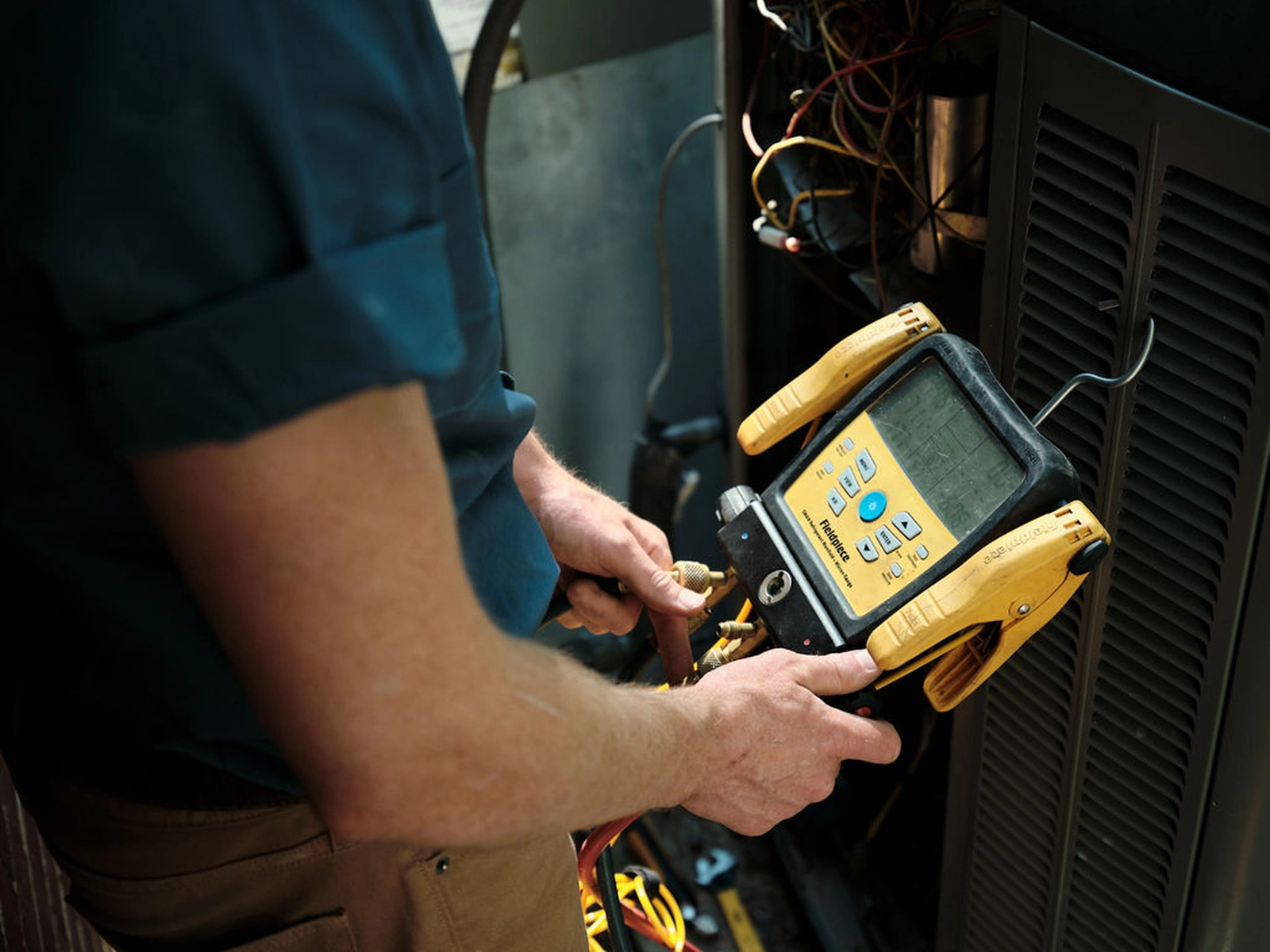
That’s the Ridgeland story we hear most. A city that sits between a busy commercial corridor and the water, where systems get run hard and humidity never really lets up. Rooted Heating & Air is the Ridgeland team that measures airflow, duct pressure, refrigerant charge, and humidity before telling you what’s wrong — because whether it’s a home near Lake Harbour or a suite in the Township, what’s actually happening inside the system is almost never what you’d guess from the thermostat reading.
5.044 Google reviewsRequest Service Quote!
How can we help you?
Mission-Driven Service From People Who Actually Care!
Why Ridgeland Homes and Storefronts Fight the Same Comfort Problem
Ridgeland runs on long hours. The offices and retail along Highland Colony Parkway and the Renaissance at Colony Park keep systems cycling from open to close, and the neighborhoods around them ask nearly as much — Mississippi summers don’t give an HVAC system an off shift. Equipment that runs that hard shows every install shortcut, and the most common shortcut is the one nobody sees: a system that was sized off a rule of thumb and set running without anyone measuring the airflow or the charge it actually delivers.
Then there’s the water. Ridgeland wraps the Ross Barnett Reservoir, and the homes and businesses near it carry an extra humidity load the rest of the metro doesn’t. Dew points hit 72°F by July and morning humidity peaks near 94% across the region — closer to the water, that moisture lingers longer into the day. A system that’s oversized cools the air fast, satisfies the thermostat, and shuts off before it has pulled that moisture out. The room reads 73 and still feels damp. The Department of Energy has found measurable duct leakage in 90–100% of tested buildings, and Ridgeland’s mix of aging strip-center rooftops and builder-grade residential ducts is no exception — conditioned air lost into a 130°F attic or plenum before it ever reaches the space you’re paying to cool.
On the commercial side it costs you on the utility meter and in customers who don’t linger. On the residential side it costs you the west-facing rooms in the afternoon and the humidity reading on the bathroom mirror at 6 a.m. Same root cause, two addresses.
None of it shows up if no one puts a gauge on it. It shows up on the bill, in the room or the corner of the shop that never keeps up, and in air that feels wrong at the right temperature.
How Rooted Diagnoses Differently
Most HVAC visits in Ridgeland go the same way. The tech hears the complaint, looks at the unit, makes an educated guess, adds refrigerant or swaps a part, writes the ticket. If the sticky, uneven feeling comes back in a few weeks, another guess. That’s the cycle the industry runs on — for homes and light commercial alike. We don’t.
Static pressure testing
Across the air handler — it tells us whether your system is fighting the ductwork or breathing freely. High static pressure is the silent killer of HVAC equipment, and it almost never gets checked.
Airflow measurement
At the registers — whether the conditioned air the system produces actually arrives where it's supposed to. In an older Ridgeland home with original ducts, the answer is often "no."
Humidity readings
At multiple points in the home to establish a baseline. The CDC recommends keeping indoor humidity below 50% day and night — in Mississippi summers that requires a system tuned, sized, and sealed to do it. Near the Reservoir, the moisture coming off the water lingers later into the day than the rest of the metro ever sees.
Refrigerant verification
Not just a quick pressure check, but a measurement against manufacturer spec. The DOE has found 29–78% of systems run with incorrect refrigerant charge. Nobody catches that without testing.
Verification after the work
We retake the measurements and show you the before-and-after. You don't take our word for it — the numbers do.
HVAC Services for Ridgeland Homes and Light Commercial
From emergency repair and high-efficiency installation to duct testing, sealing, and maintenance for homes and small commercial spaces, every job starts with measurement — so the fix addresses the root cause, not just the symptom. Our commercial work stays genuinely light — storefronts, single suites, and small offices.
What Ridgeland Neighbors Get When They Choose Rooted
The Make-It-Right Guarantee
A 1-year guarantee on parts we replace during service calls, plus an 18-month workmanship guarantee on every install (refrigerant excluded — owner-paid). New installs carry the manufacturer’s equipment warranty — 5 years standard or 10 if we register it at install.
NCI-certified diagnostics
National Comfort Institute training in airflow, static pressure, and combustion — the certification that requires you to actually measure what’s happening in the duct system. It’s why we can tell you what’s wrong before we tell you what it costs.
We don’t sell what you don’t need
We’d rather lose the sale than push you toward a $9,000 replacement when a $400 repair — or a proper commissioning of the system you already own — would have solved it. The numbers tell us when replacement is the right call. When they don’t, we say so.
The old-fashioned part
Honest pricing. Plain answers. Showing up when we said we would, and treating the people who let us into their homes and businesses the way we’d want our own family treated.
Serving Ridgeland Neighborhoods
We work across Ridgeland — the Reservoir side, the older streets, and the Colony Park corridor — and we know how each area’s buildings tend to fail:
Lake Harbour
Established homes close to the Reservoir where waterfront humidity is the unsolved problem. Right-sizing and dehumidification matter more here than raw cooling capacity.
Bristol Park
Newer subdivision construction with builder-grade duct runs through hot attics. Duct testing usually finds the leakage before we touch the equipment.
Wellington
Larger two-story homes where the upstairs zone and the long duct runs drift warm. Balance and static pressure drive comfort far more than the brand on the box.
Old Canton Road corridor
Older mixed residential near the town’s original spine. Original ductwork meets newer equipment; measured retrofits beat wholesale replacement.
Colony Park / Highland Colony
Offices, retail, and mixed-use where rooftop and split systems run open-to-close. Static pressure and economizer checks recover efficiency that long runtimes quietly burn.
Township at Colony Park
Mixed retail and office suites with zoning demands and varied schedules. Airflow measurement per zone is what makes the thermostats actually agree with the rooms.
Ready for Reliable Comfort? We're Just a Call Away!
Don't let comfort problems linger - your home deserves better, and so do you!