
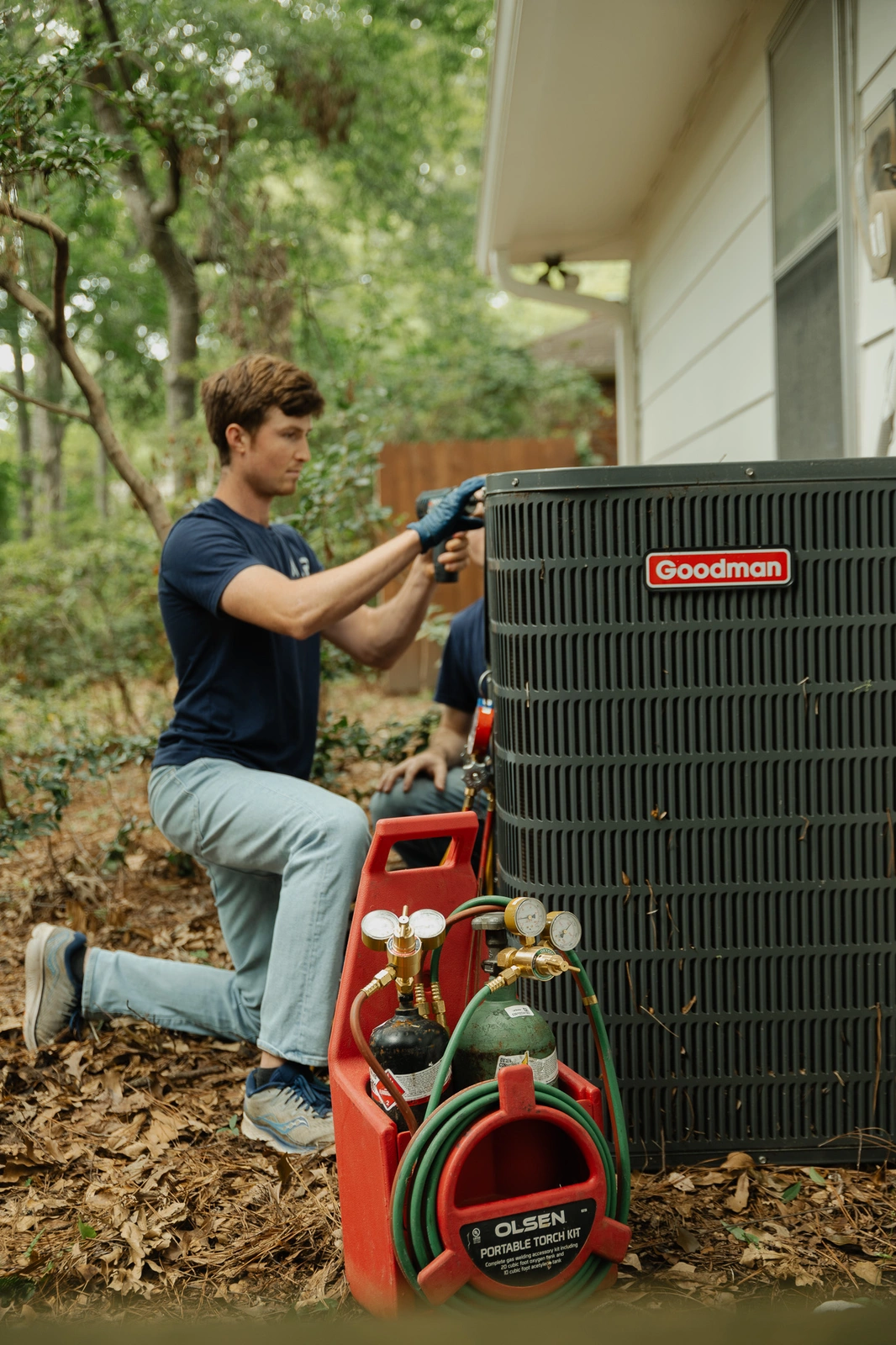
AC Installation & Replacement in Pearl, MS
In Pearl the two things that decide whether a new air conditioner actually fixes your house both sit out of sight: the water table under the slab and the ductwork in the attic. Down in the river bottoms the ground stays wet, the moisture load hangs heavier and longer than it does up on higher ground, and a unit sized only to 'cool fast' will hit the thermostat and quit before it has touched that damp. Overhead, in a post-war or '60s–'70s ranch, the supply runs are the original sheet metal — never sealed, leaking into an attic that bakes past 130° by July. Rooted Heating & Air replaces cooling in Pearl by measuring both first: a real load calculation that weighs the moisture, the ducts proved under pressure, and the system commissioned at start-up, so the comfort you buy is the comfort you get to keep.
- A load calculation that reads your actual Pearl home — its glass, its shell, and its river-bottom moisture load — not the tonnage of the old unit
- Sizing set to run long and steady for a high-water-table climate, so the house dries out instead of just chilling
- Original attic ductwork tested and sealed before install, because a new condenser on leaky ranch ducts still bleeds its capacity
- Airflow and refrigerant charge dialed to spec at start-up, so the efficiency you finance shows up on the power bill
Request Service Quote!
How can we help you?
Mission-Driven Service From People Who Actually Care!
your trusted local HVAC experts
Delivering high-value AC Installation & Replacement to Pearl, MS homes and light commercial
Fast Response Times
Same-day service to quickly meet your AC Installation & Replacement needs
certified & experienced
NCI-certified diagnostics and years of hands-on experience
honest pricing
Transparent, upfront pricing with no hidden costs.
family-owned & operated
Biblically-based business with a focus on integrity and care.
Sized for a Number, Not for the River Air
Why a New AC in Pearl Can Still Leave the House Damp
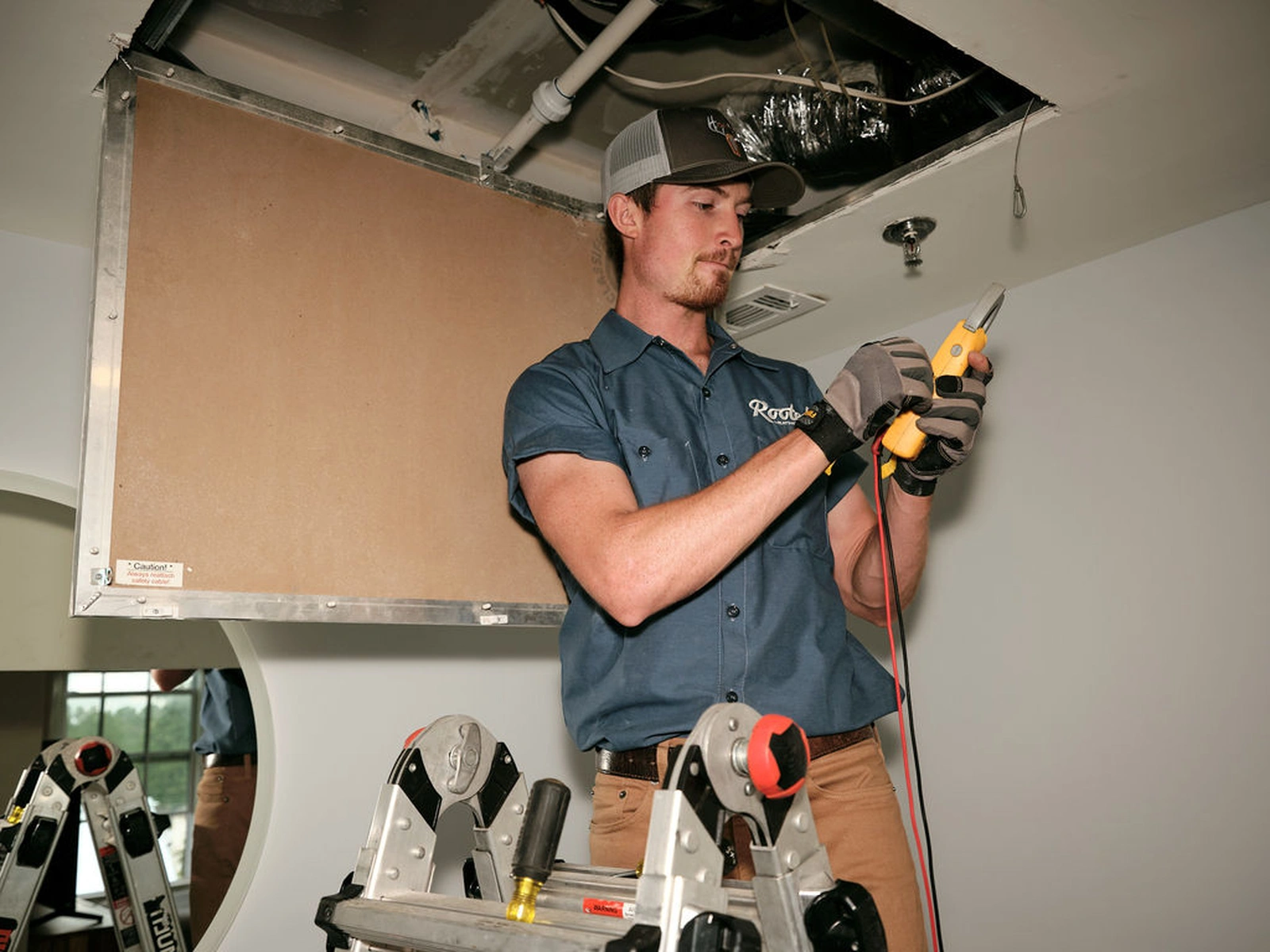
Begin with the moisture, because it's the part every spec sheet leaves out — and in Pearl it's the whole ballgame. The town sits low along the Pearl River with a high water table right under the slab, so the damp that a system has to pull out lingers longer and pushes harder here than it does a few miles up the hill. An air conditioner's real work in that air is latent: wringing water out, not merely dropping a temperature. An oversized unit is exactly the wrong tool for it, because it satisfies the thermostat in a short cold burst and shuts off before it has dehumidified anything. The wall reads 73 and the house still feels like a wet towel. Bigger isn't safer down here — it's clammier.
Then look up at the ducts. A lot of Pearl's housing is post-war and 1960s–70s ranch, and plenty of it still runs the original attic sheet metal — laid before duct sealing was ever standard, and leaking after fifty-odd years of it. The Department of Energy has found measurable leakage in the overwhelming majority of homes it has checked, and a run that gives up a quarter of its cooled air into a 130° Pearl attic will lose to this climate no matter how good the box hanging off it is. A gleaming new condenser doesn't seal a split seam or a crushed boot; it just pays the same leak a bigger electric bill.
And out along the Highway 80 corridor, Pearl's light-commercial spaces fight the identical battle on a larger meter — rooftop and split units running open-to-close against river-bottom humidity, their static pressure and charge unchecked for years. None of it shows up in a quote written off the old unit's tonnage. It shows up afterward: in a back bedroom that never keeps up, a shop corner that stays warm all afternoon, and a power bill that barely moved after a five-figure install. A replacement that skips the load calc and the duct test is a replacement built to repeat the last one.
The Bill for Skipping the Measurements
What a Tonnage-Match Changeout Costs a Pearl Home
- The new system holds the setpoint but the house still feels swampy down in the river bottoms, because it was sized to cool quickly instead of to draw the moisture out.
- You financed a high-efficiency unit and the electric bill barely flinched, because nobody commissioned the airflow and charge that let it reach its rating.
- The oversized unit short-cycles — a cold blast, then quiet — so it never runs long enough to beat back a high-water-table summer.
- The original '60s ranch ductwork was never tested, so the new equipment bleeds a third of its capacity into a 130° attic exactly the way the old one did.
- A Highway 80 storefront loses the back of the room to warm air and burns money on a rooftop unit fighting static pressure no one ever put a gauge on.
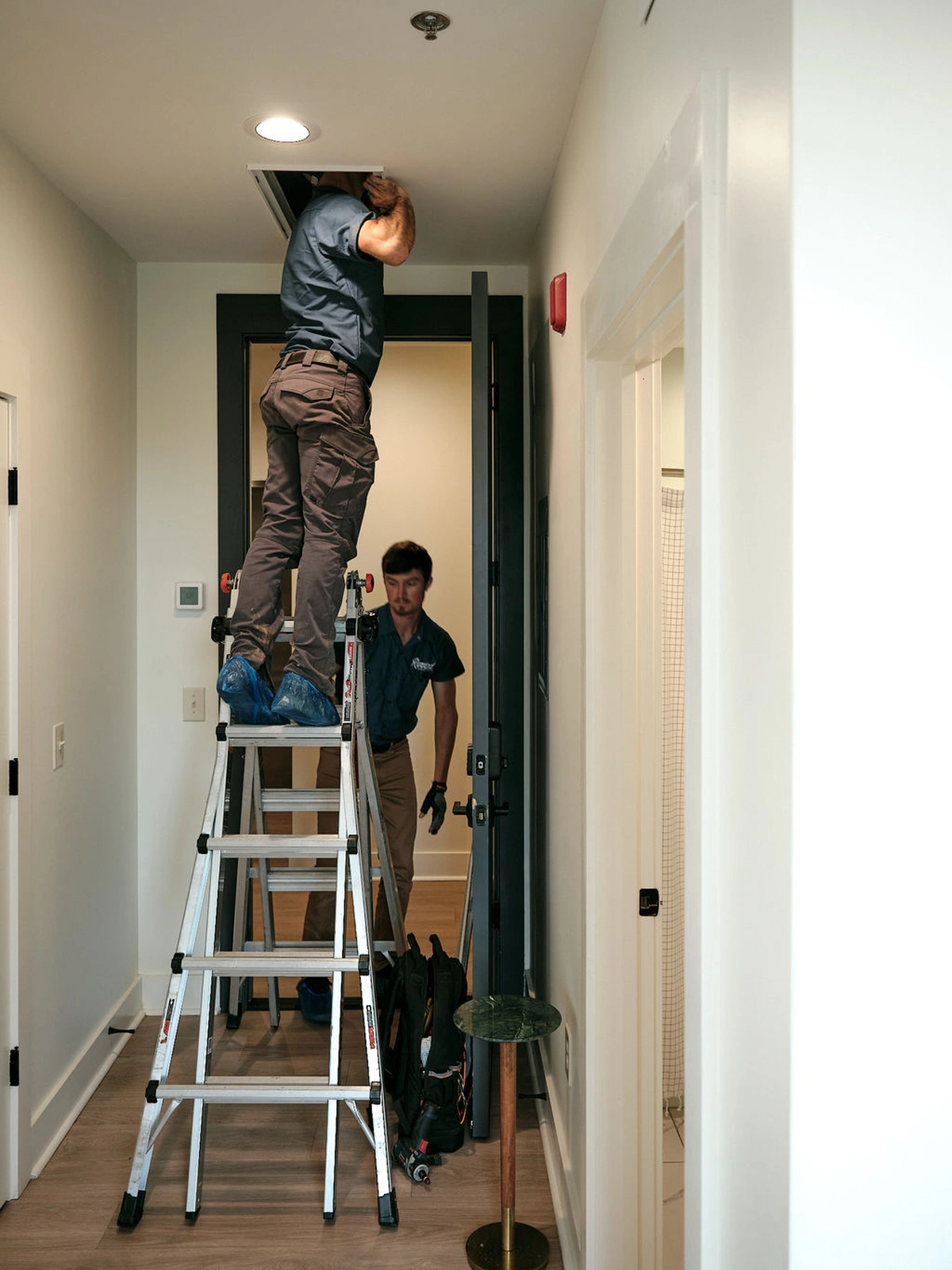
Measure the House and the Ducts, Then Pick the Box
Load Calc, Duct Test, Commissioned Start-Up
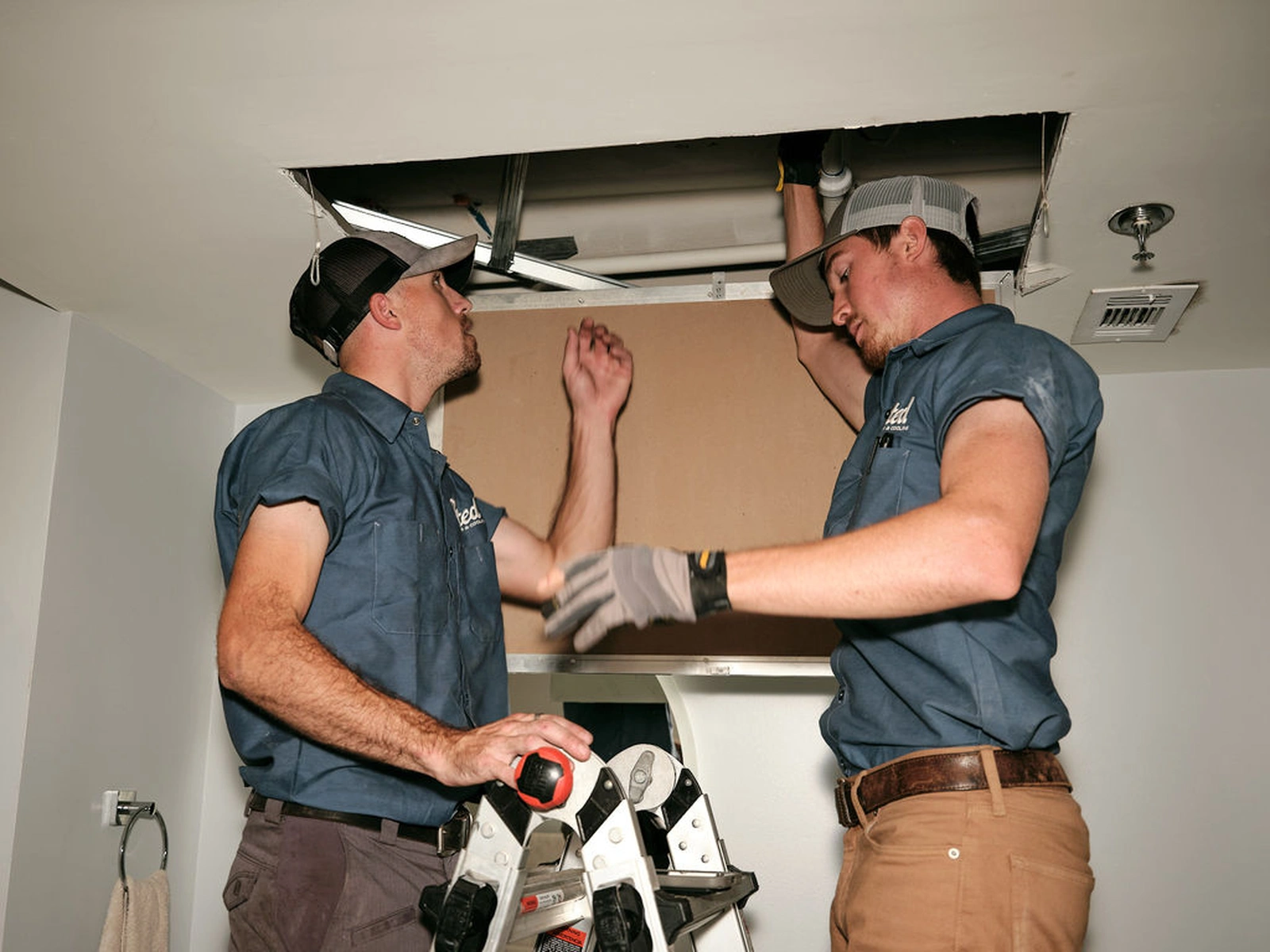
We put cooling in the way the manufacturers and the codes actually intend, and in Pearl that starts with an ACCA Manual J load calculation that gives the river-bottom moisture load its due weight alongside the home's windows, insulation, and orientation. That number tells us the capacity the house genuinely needs, not the capacity that happened to be bolted there in 1972. Before a piece of equipment gets discussed, we test the duct system under pressure — because in Pearl's older ranches the original attic runs are usually where the last system quietly lost its performance. Seal and correct those first, and a right-sized unit outruns an oversized one every time.
Install day isn't finished when the condenser first hums. We read total external static pressure, confirm airflow across the coil, and weigh in or tune the refrigerant charge to the maker's target — the commissioning that separates a system that reads right on paper from one that truly dries a low-lying Pearl house and holds its rated efficiency. In a Northside subdivision that means a system that finally keeps the back rooms even; on a Highway 80 rooftop it means proving the airflow and charge before the doors open. The comfort comes from the measurements behind the install, and it's the same measure-first habit we carry into every tune-up, repair, and heating job across Pearl.
How We Install
Every Pearl install runs the same measured path — load calc and duct test first, honest equipment options second, and a commissioned, permitted install to finish. You'll know the tonnage, the reasoning behind it, and the number your new system is actually hitting before we ever call the job done.
Easy Scheduling
Book your AC Installation & Replacement consultation online or call us
Professional Arrival
Clean, professional technicians arrive on time with proper equipment
Thorough Assessment
Complete assessment with transparent explanation of findings
Expert Execution
Expert AC Installation & Replacement execution with attention to detail
Quality Verification
Final quality check and system performance verification
Frequently Asked Questions
Does Pearl sitting low along the river change how my AC should be sized?
My house is a 1960s Pearl ranch — do the old ducts matter for a new system?
Do you install AC for light-commercial spaces along Highway 80, not just homes?
How do I know a high-efficiency system will really run at its rated SEER?
The Numbers on the Table Before the Options
The Pearl Install Team That Reads the House First
Rooted Heating & Air is a family-owned team that treats a Pearl install as a fifteen-year decision, not a box to swap. The easy sale is a bigger unit — down in the river bottoms, 'more capacity for the humidity' sounds right up until you learn that oversizing makes the damp worse, not better. We'd rather run the load calc, test the old ranch ducts, and size it correctly than sell you around a problem the measurements say we can solve properly.
You get the load calculation, the duct-test results, and the commissioning numbers in plain language, before and after the work — a Northside changeout and a Highway 80 rooftop held to the very same standard. When the reasoning is sitting in front of you, choosing the right system for the next fifteen years stops being a gamble; the same plain-dealing carries straight into the tune-ups, repairs, and heating installs we run across Pearl.
Serving Pearl, MS homes and businesses
Integrity
We do what we say we are going to
Done right, 1st time
Job done right or we'll make it right
High quality work
No shortcuts , just proper fixes
Reasonable Prices
Upfront, honest pricing = win/win
What AC Installation Looks Like Across Pearl
Pearl sits in Rankin County, about six miles east of Jackson and low along the Pearl River, and that low ground is why sizing here is a moisture problem before it's anything else. A high water table under the slab keeps the ground damp, so the humidity a system has to remove lingers later into the day than it does up on the ridge. Summer dew points climb past 70° and hold, which means the number that makes a home comfortable is how much moisture the system pulls out, not just the temperature it reaches. An oversized unit short-cycles and leaves the damp behind; a right-sized one, commissioned to run long and steady, is what actually dries a river-bottom Pearl house out.
Replacing a refrigerant-containing system in Pearl is permitted, inspected work — not a quiet cash swap. It's the kind of changeout a licensed Mississippi contractor pulls a permit for and carries through inspection, and the energy code expects a load calculation when a system goes in, one more reason a Pearl replacement should open with a Manual J rather than a tape measure on the old cabinet. We pull the permit and hand you the record, which counts at resale and on an insurance claim down the road.
A typical Pearl install we're called for starts in one of two places: a Northside subdivision where a '60s–'70s system has finally timed out over ducts nearly as old, or a river-bottom home that's never truly kept up with the summer damp. Instead of quoting a bigger box, we run the Manual J, test the original attic runs under pressure, and usually find the tonnage was fine — the sealing and the airflow weren't. The install that follows is right-sized, the leaking seams are corrected, and the system is commissioned to charge and airflow spec. Along Highway 80 the same method covers the light-commercial rooftops. Measure the house, correct the ducts, then install.
Northside Pearl
Established 1960s–70s subdivisions where the original systems are on their last legs. The install win is a right-sized replacement after a duct test — not a bigger box dropped onto the same leaky attic runs.
Pearl River bottoms
Low-lying homes over a high water table where lingering humidity, not raw heat, is the real problem. We size for the latent load and commission the system to run long enough to dehumidify, rather than adding tonnage that makes the damp worse.
Highway 80 corridor
Modest homes and light commercial on long-running rooftop and split systems. We size to the real load and commission static pressure and charge, because open-to-close runtimes expose every airflow shortcut a tonnage-match quote ignores.
Ready for Reliable Comfort? We're Just a Call Away!
Don't let comfort problems linger - your home deserves better, and so do you!